Hinduism, one of the world’s oldest religions, is deeply spiritual and highly symbolic. Hindu symbols represent aspects of the divine, natural forces, and various stages of the spiritual journey. Let’s explore 24 meaningful Hindu symbols that bring rich cultural and spiritual significance to daily life and rituals.
🌸 24 Powerful Hindu Symbols: Meanings, Uses, and Fascinating Facts 🌸
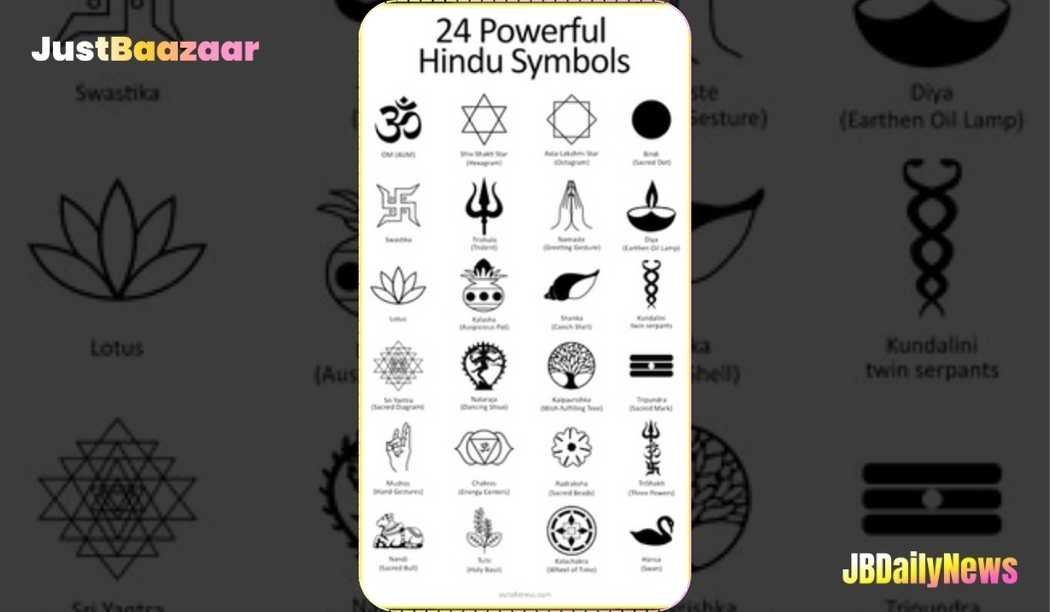
1. Om (ॐ)
🔊
Meaning: Om is the primordial sound, representing the universe and the essence of the ultimate reality.
Usage: Used in meditation, mantras, and prayers, Om connects one with universal consciousness.
- Considered the most powerful sound, encompassing all creation.
- Each part of the Om symbol represents a state of consciousness: waking, dreaming, and deep sleep.
2. Swastika (卐)
✨
Meaning: The Swastika symbolizes auspiciousness, prosperity, and good fortune.
Usage: Seen in temples, homes, and rituals, it invokes blessings and protection.
- One of the oldest symbols, predating many cultures.
- Represents the four Vedas, directions, and stages of life.
3. Lotus (Padma) 🌸
🌺
Meaning: Symbolizes purity, enlightenment, and spiritual growth, blossoming from muddy waters to full beauty.
Usage: Used in art, meditation, and as an offering to gods, symbolizing spiritual awakening.
- Linked to goddesses Lakshmi and Saraswati.
- Each petal represents a unique chakra in spiritual practices.
4. Trishula (Trident)
🔱
Meaning: Represents the trinity of creation, maintenance, and destruction.
Usage: Symbolizes Lord Shiva’s power to destroy evil.
- Each prong signifies past, present, and future.
- Often seen with Shiva in artwork and sculptures.
5. Tilak (तिलक)
🟠
Meaning: A mark on the forehead symbolizing devotion, spirituality, and blessing.
Usage: Used during worship and rituals to indicate respect for the divine.
- Patterns vary by caste, sect, and deity.
- Commonly made with sandalwood paste or vermillion.
6. Bindi (बिंदी)
🔴
Meaning: Represents the third eye and enhances spiritual awareness.
Usage: Traditionally worn by Hindu women to signify marital status.
- In modern times, worn by women regardless of marital status.
- Serves as an ornamental mark in daily life.
7. Chakra (Wheel)
🔵
Meaning: Symbolizes energy centers in the body, linked to physical, mental, and spiritual balance.
Usage: Used in yoga and meditation to align body energy.
- There are seven main chakras, each with unique qualities.
- Chakras connect the mind, body, and spirit.
8. Kalasha (Kalash) 🏺
🪔
Meaning: The Kalasha, or sacred pot, symbolizes abundance, prosperity, and wisdom.
Usage: Used in rituals to signify the goddess of wealth, Lakshmi.
- Often filled with water, mango leaves, and a coconut for worship.
- Represents the universe and is a central symbol in pujas.
9. Rudraksha (रुद्राक्ष) 🌰
🔮
Meaning: The seeds from the Rudraksha tree are known to bring protection, healing, and spiritual growth.
Usage: Worn as beads or necklaces to improve mental clarity and maintain balance in life.
- Associated with Lord Shiva and said to reduce stress and negativity.
- The number of beads often represents the intention, such as healing, love, or prosperity.
For More info Visit Career Building School
10. Veena (वीणा)
🎶
Meaning: The veena, a traditional musical instrument, symbolizes the arts, music, and wisdom.
Usage: Often associated with Saraswati, the goddess of knowledge and arts, it represents the harmony of knowledge and creativity.
- Depicted with Saraswati, who uses it to play divine music of knowledge.
- Represents mastery over skills and intellect.
11. Shankha (Conch Shell)
🐚
Meaning: The Shankha represents purity, brilliance, and the call to action. Its sound is believed to clear negativity.
Usage: Blown during Hindu rituals to announce the beginning of worship and invite auspicious energies.
- Considered sacred and used in daily temple rituals.
- Associated with Vishnu, who holds it as a symbol of the divine sound of the universe.
12. Peacock Feather
🪶
Meaning: The peacock feather signifies beauty, grace, and knowledge. It’s also a symbol of Lord Krishna, representing divine love.
Usage: Often used in decoration and worship, symbolizing purity and harmony.
- Worn by Krishna as a crown, symbolizing his connection to nature and beauty.
- Represents spiritual awakening and knowledge.
13. Vibhuti (Sacred Ash)
🌫️
Meaning: Vibhuti, or sacred ash, represents purity, detachment, and the ultimate truth of life.
Usage: Applied on the forehead as a reminder of the impermanence of life and as a mark of devotion to Lord Shiva.
- Symbolizes the burning away of ego and worldly attachments.
- Associated with Lord Shiva and seen as a purifier of body and mind.
14. Nataraja (Dancing Shiva)
💃
Meaning: Nataraja, the depiction of Lord Shiva dancing, represents the cosmic cycle of creation, preservation, and destruction.
Usage: Displayed as a statue or image in temples and homes to honor the dance of the universe.
- Shiva’s dance symbolizes both the rhythm and harmony of life and destruction of ignorance.
- The raised foot signifies liberation, while the drum represents the rhythm of creation.
15. Kamandalu (Water Pot)
🏺
Meaning: The Kamandalu is a water pot that represents simple living, renunciation, and spiritual purity.
Usage: Carried by sages and deities, it symbolizes the yogic path and inner spiritual cleansing.
- Often seen in the hands of Lord Shiva and sages, symbolizing austerity.
- Holds sacred water and represents the ability to contain spiritual energy.
16. Dhvaja (Flag)
🏳️
Meaning: The Dhvaja, or temple flag, represents victory, strength, and the presence of divinity.
Usage: Raised on temples to symbolize the presence of the divine and to invite devotees to worship.
- The flag is raised to announce auspicious events and signify spiritual protection.
- Each temple often has its unique design and color of Dhvaja.
17. Aumkar Hand Mudra
✋
Meaning: A hand gesture representing peace, mindfulness, and the essence of “Om” as a greeting and blessing.
Usage: Used in meditation, yoga, and as a sign of respect in Hindu and Buddhist practices.
- The hand gesture symbolizes unity and the connection to universal consciousness.
- Used by yogis to channel and balance energy during meditation.
18. Gada (Mace)
⚔️
Meaning: The Gada, or mace, symbolizes strength, power, and protection, often associated with Lord Hanuman and Lord Vishnu.
Usage: Seen as a symbol of divine strength and the power to overcome evil.
- Lord Hanuman wields the gada, representing his immense strength and loyalty.
- Symbolizes spiritual discipline and control over one’s mind and body.
19. Kalachakra (Wheel of Time)
⏳
Meaning: The Kalachakra, or Wheel of Time, represents the cyclical nature of life, time, and the universe.
Usage: Used in meditation and temple art to represent cosmic cycles and the concept of karma.
- Encourages awareness of life’s impermanence and the continuity of time.
- Linked to the teachings of both Hinduism and Buddhism about the cycles of rebirth.
20. Cow (Gau Mata)
🐄
Meaning: The cow symbolizes maternal care, nourishment, and prosperity. It is considered sacred in Hinduism.
Usage: Revered as Gau Mata, the cow is honored in festivals, and caring for cows is seen as a noble deed.
- Considered the embodiment of all deities, providing milk and nourishment.
- Cows are honored on Govardhan Puja and worshipped as a form of Lakshmi, the goddess of wealth.
21. Banyan Tree (वट वृक्ष)
🌳
Meaning: The banyan tree symbolizes longevity, eternal life, and shelter. It is revered as a symbol of immortality in Hindu culture.
Usage: Often worshipped and protected in temples and villages, symbolizing the connection between the physical and spiritual worlds.
- Associated with Lord Krishna and considered a sacred tree in Hinduism.
- Represents the continuity of life, as it regenerates and grows endlessly.
22. The Kalpavriksha (Wish-Fulfilling Tree)
🌲
Meaning: The Kalpavriksha is the divine tree of wish fulfillment, symbolizing abundance, blessings, and the fulfillment of desires.
Usage: Mentioned in ancient scriptures as a symbol of prosperity and often depicted in temple art as a sacred tree.
- Believed to grant wishes and provide material and spiritual benefits to devotees.
- Considered a divine gift and often linked to tales of heaven and paradise.
23. Peacock (मोर)
🦚
Meaning: The peacock represents beauty, grace, and spirituality, often symbolizing divine love and joy.
Usage: Associated with Lord Krishna, who wears a peacock feather in his crown, symbolizing the harmony of nature and spirituality.
- The peacock feather represents purity and the all-seeing eye of divine consciousness.
- It is believed that the peacock’s plumage absorbs and deflects negative energy.
24. Shivalinga (Shiva Linga)
🕉️
Meaning: The Shivalinga represents the formless, infinite nature of Lord Shiva, symbolizing creation, existence, and destruction.
Usage: Worshipped as a central symbol of Lord Shiva, often found in temples and homes as an object of reverence and meditation.
- Signifies the cosmic pillar of light, a symbol of divine energy and consciousness.
- Represents the unity of male and female energies, merging creation and spirituality.
🌟 Conclusion: The Sacred Language of Symbols 🌟
Hinduism, one of the world’s most ancient and diverse spiritual traditions, uses symbols as a powerful language to communicate profound truths, moral values, and cosmic principles. Each of these symbols—from the simplicity of the Om to the majesty of the Shivalinga—embodies a deeper meaning that connects the physical world with the divine. They remind devotees of the spiritual journey and the unity between the self and the cosmos.
Whether worn, displayed, or worshipped, these symbols act as conduits for energy, wisdom, and blessings. They serve as reminders of the divine presence in every aspect of life, guiding practitioners toward greater peace, awareness, and connection to universal consciousness.
May this exploration of Hindu symbols inspire deeper understanding and respect for their beauty and significance. As we recognize the sacred in these symbols, we invite more spirituality, love, and harmony into our lives.
1. ❓ What is the meaning of the Om symbol?
- 🕉️ Answer: The Om symbol represents the sound of the universe and the essence of ultimate reality. It’s used in meditation to align with universal consciousness.
2. 🌸 Why is the lotus flower sacred in Hinduism?
- 🌺 Answer: The lotus represents purity and spiritual growth as it blooms beautifully from muddy waters. It symbolizes the journey from ignorance to enlightenment.
3. 🔱 What does the trishula (trident) symbolize?
- 👑 Answer: The trishula signifies creation, maintenance, and destruction, symbolizing Shiva’s power. Each prong represents time: past, present, and future.
4. 🐚 What is the significance of the Shankha (conch shell)?
- 🎶 Answer: The Shankha is blown to purify the environment and invite divine energy. Its sound is believed to remove negativity and bring harmony.
5. 🌳 Why is the banyan tree considered sacred?
- 🌱 Answer: The banyan tree symbolizes eternal life, shelter, and protection. It’s revered as it provides shadeand is believed to have spiritual energy.
6. 🪶 What does the peacock feather represent?
- 🦚 Answer: Peacock feathers symbolize grace, beauty, and protection against negativity. Associated with Lord Krishna, they represent divine love.
7. 💖 What is the purpose of the Bindi?
- 🔴 Answer: The bindi, worn on the forehead, symbolizes the third eye and spiritual vision. It’s also a mark of devotion and cultural identity.
8. 🪔 Why is the Kalasha (pot) used in rituals?
- 🌾 Answer: The Kalasha, filled with water and leaves, symbolizes abundance and prosperity. It’s often dedicated to goddess Lakshmi to invite wealth and blessings.
9. 🔥 What does Vibhuti (sacred ash) signify?
- 🌫️ Answer: Vibhuti represents purity and the impermanence of life. Applied on the forehead, it reminds devotees of the transient nature of the material world.
10. ✋ What does the Aumkar hand mudra mean?
- 🙏 Answer: The Aumkar hand mudra is a symbol of peace and spiritual mindfulness. It’s used in meditation to balance energy and connect with universal consciousness.
11. 🏳️ What is the importance of the Dhvaja (temple flag)?
- 🎏 Answer: The Dhvaja signifies the presence of divinity and spiritual protection. Raised on temples, it invites blessings and marks auspicious occasions.
12. 🏺 What does the Kamandalu (water pot) represent?
- 🌿 Answer: The Kamandalu, carried by sages, represents renunciation and purity. It symbolizes simplicityand spiritual discipline on the yogic path.
13. 🕉️ Why is the Shivalinga worshipped in Hinduism?
- 🌌 Answer: The Shivalinga symbolizes Shiva’s infinite and formless energy. It’s worshipped as a representation of creation, preservation, and dissolution.
14. ⚔️ What does the Gada (mace) signify?
- 💪 Answer: The gada symbolizes strength, protection, and loyalty, often associated with Hanuman. It’s a reminder of resilience and courage against challenges.
15. 🐄 Why is the cow sacred in Hinduism?
- 🐮 Answer: The cow, or Gau Mata, represents motherly care, nourishment, and prosperity. Honored for its contributions, it’s seen as the embodiment of divinity and life.