Menstruation is a natural biological process, yet it often brings along a host of unpleasant symptoms like cramps, bloating, mood swings, fatigue, and cravings. While painkillers and hot water bottles are common companions during this time, your diet plays a powerful role in how your body feels during your periods.
Are You on Your Periods? Here’s What to Eat and Avoid This Week – A Complete Guide to Period Nutrition
In this blog, we’ll explore in detail what foods to eat and avoid when you’re on your period – to help you reduce discomfort, boost energy levels, and improve mood naturally.
🌸 Why Nutrition Matters During Periods
When you’re menstruating, your body goes through hormonal changes, blood loss, and shifts in serotonin levels. This impacts:
Energy levels
Mood and emotional health
Muscle contractions (cramps)
Water retention (bloating)
Iron levels (risk of deficiency)
Eating the right foods can replenish lost nutrients, reduce inflammation, balance hormones, and support overall menstrual wellness.
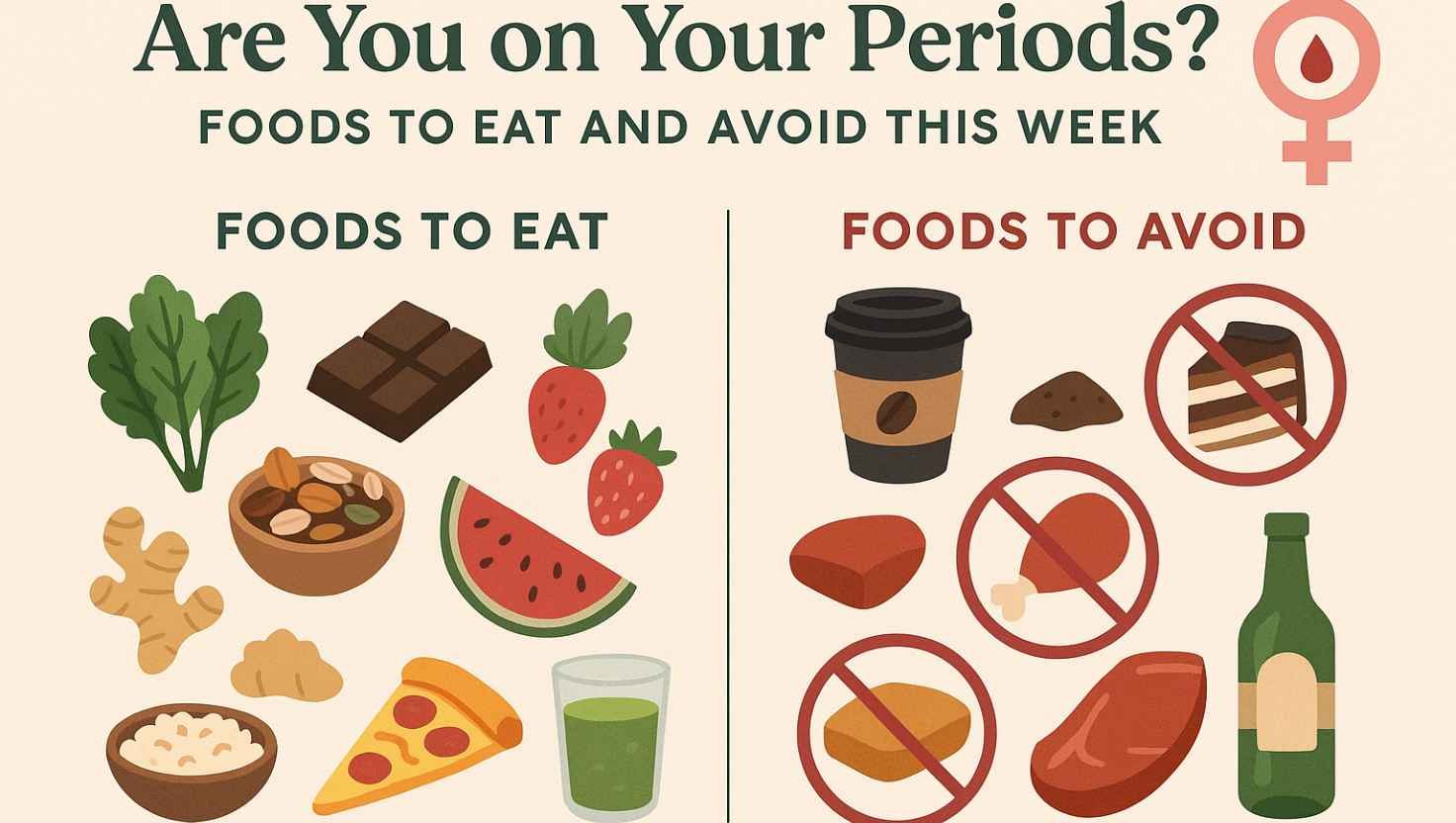
✅ Best Foods to Eat During Your Period
🥬 1. Leafy Green Vegetables
Examples: Spinach, kale, methi, moringa
These are rich in iron, magnesium, and calcium—nutrients you lose during menstruation.
Benefits:
Prevents fatigue from iron loss
Reduces bloating and muscle cramps
Tip: Add spinach to your dal, paratha, or smoothie.
🍫 2. Dark Chocolate (70%+)
High in magnesium and antioxidants, dark chocolate can uplift your mood and reduce period cramps.
Benefits:
Improves serotonin levels (good for mood)
Reduces muscle tension
Tip: Have 1–2 squares a day, not the whole bar!
🥜 3. Nuts & Seeds
Examples: Almonds, walnuts, chia seeds, flaxseeds, pumpkin seeds
These are loaded with healthy fats, vitamin E, zinc, and magnesium.
Benefits:
Anti-inflammatory effects
Supports hormone balance
Keeps you full and satisfied
Tip: Snack on trail mix or sprinkle seeds on your curd or smoothie.
🍚 4. Complex Carbohydrates
Examples: Brown rice, oats, quinoa, millets
Slow-digesting carbs help stabilize blood sugar and improve energy.
Benefits:
Reduces irritability
Prevents sugar crashes and fatigue
Tip: Opt for poha with veggies, oats porridge, or millet dosa.
🍓 5. Fruits
Examples: Bananas, oranges, berries, watermelon
Rich in fiber, natural sugars, water content, and vitamins like B6 and C.
Benefits:
Reduces bloating
Combats sugar cravings healthily
Hydrates the body
Tip: Make a fruit bowl with banana, papaya, and berries.
🧄 6. Anti-inflammatory Foods
Examples: Turmeric, ginger, garlic
These have natural pain-relieving and anti-inflammatory properties.
Benefits:
Reduces cramps
Improves digestion
Tip: Have ginger tea or add haldi to warm milk at night.
🧃 7. Hydrating Foods & Drinks
Examples: Coconut water, cucumber, herbal teas, soups
Dehydration worsens cramps and bloating.
Benefits:
Flushes out toxins
Eases digestion
Prevents headaches
Tip: Sip on fennel or chamomile tea during the day.
❌ Foods to Avoid During Your Period
🍟 1. Salty & Processed Foods
Examples: Chips, instant noodles, packaged snacks
These are high in sodium and preservatives.
Effects:
Worsens bloating and water retention
Increases inflammation
Tip: Replace with homemade roasted snacks or fruits.
☕ 2. Caffeine
Examples: Coffee, energy drinks, cola
Caffeine can cause vasoconstriction (narrowing of blood vessels) and irritability.
Effects:
Worsens cramps
Triggers anxiety and sleep issues
Tip: Switch to herbal teas or haldi milk.
🍰 3. Sugary Foods
Examples: Pastries, sweets, chocolates with milk, candies
Sugar causes sudden insulin spikes and crashes.
Effects:
Mood swings
Fatigue
Increased cravings
Tip: Eat dates or fruit-based desserts to satisfy sweet cravings.
🍗 4. Red Meat
High in saturated fats and prostaglandins (which increase cramps).
Effects:
Increases inflammation
Triggers digestive discomfort
Tip: Choose plant-based proteins like legumes, tofu, or paneer.
🍕 5. Refined Carbs
Examples: White bread, pasta, baked goods
These spike blood sugar quickly and are low in nutrients.
Effects:
Fatigue
Cravings
Mood dips
Tip: Choose whole grains instead like oats or ragi.
🍾 6. Alcohol
Even moderate drinking can dehydrate the body and affect hormonal balance.
Effects:
Increases bloating
Triggers fatigue
Affects sleep
Tip: Stick to herbal teas or coconut water for better hydration.
🗓 Period Week Diet Plan (Sample)
| Day | Breakfast | Lunch | Snack | Dinner |
|---|---|---|---|---|
| Day 1 | Oats porridge + banana | Palak dal + brown rice + salad | Chia seed smoothie | Quinoa pulao + curd |
| Day 2 | Moong chilla + chutney | Methi thepla + dahi | Handful of nuts + fruit | Khichdi + turmeric milk |
| Day 3 | Ragi idli + sambar | Tofu bhurji + millets | Herbal tea + roasted makhana | Veg soup + chapati |
| Day 4 | Banana smoothie + seeds | Rajma + red rice + salad | Dark chocolate + almonds | Vegetable stew + paratha |
🌿 Final Tips for a Happier Period Week
Stay hydrated (2.5–3 liters/day)
Practice gentle exercise like yoga or walking
Use a heating pad for cramps
Prioritize sleep and rest
Keep a period journal to track food reactions
💬 Conclusion
Your period week doesn’t have to be a struggle. With mindful eating, you can nourish your body, balance your hormones, and ease symptoms naturally. Every woman’s body is unique, so observe how you respond to certain foods and create a routine that suits your cycle.
Let food be your support, not your stress.