Introduction: When Words Become Weapons
“India is a Dead Economy!”
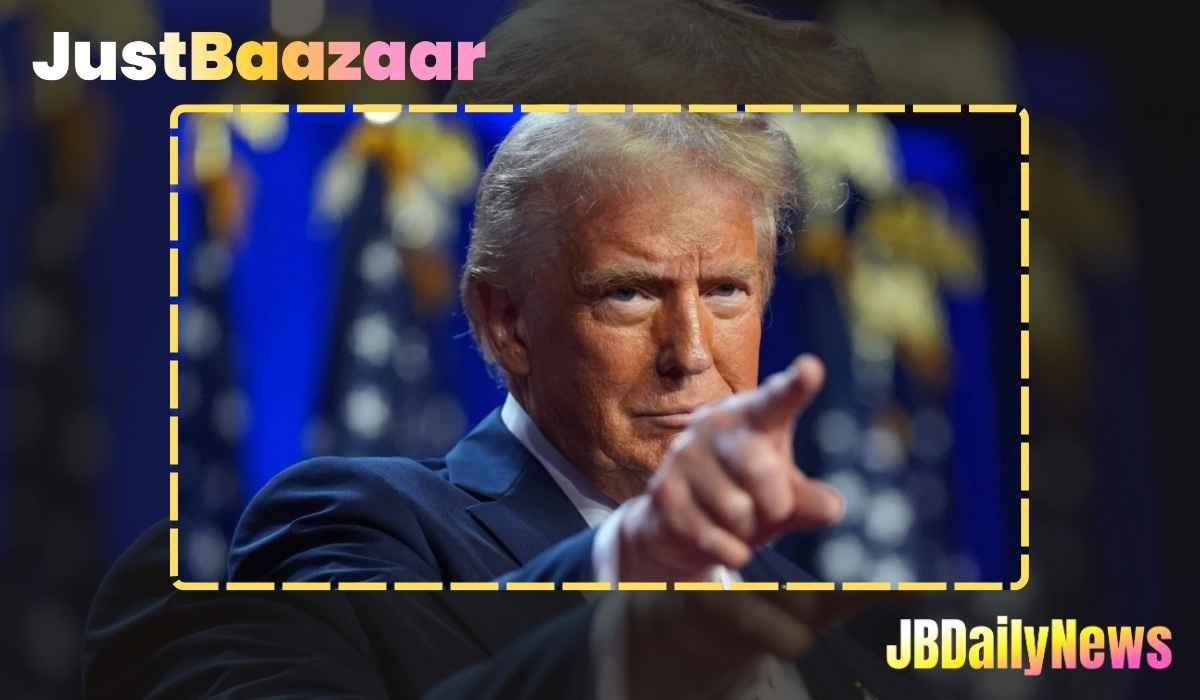
When Donald Trump, former US President, made this statement, global headlines lit up.
For India, it wasn’t just a careless insult. It was a direct challenge to our credibility as the world’s fastest-growing major economy. For Americans, it was a fiery political punch. For the opposition in India, it was an unexpected opportunity to corner the government.
But beyond the noise, we need to ask:
What does “Dead Economy” even mean?
Is India really struggling at that level?
Or is this simply a game of political blackmail and global bargaining?
This blog will break down the controversy, the context, and the truth — so you can understand what’s at stake for India.
Section 1: Trump’s “Dead Economy” Remark — The Timeline
The controversy didn’t happen in isolation. Let’s retrace the events:
Tariff Threats: Trump announced a 25% tariff on Indian goods, citing trade deficits.
Pakistan Oil Deal: Hours later, he claimed the US had struck a deal with Pakistan to extract and sell oil — even suggesting India might end up buying Pakistani oil.
Dead Economy Comment: The very next day, Trump equated India with Russia, calling both “Dead Economies.”
Within 48 hours, three explosive statements shook India’s position on trade, diplomacy, and global economy.
Opposition leaders in India, including Rahul Gandhi, even echoed Trump’s words. “India is a Dead Economy,” he said on camera, fueling an already intense debate.
Section 2: The Politics of Blackmail
Why did Trump say this?
Here’s the principle:
👉 Blackmail only works when the victim allows fear to dictate decisions.
For weeks, Trump had been pushing India quietly — using tariffs, sanctions, and pressure tactics. But once India refused to bend fully, he escalated into insults and direct threats.
This isn’t new in global politics. Blackmail in international relations is as old as diplomacy itself.
Sanctions on Iran.
Trade wars with China.
Threats to Brazil, Europe, and NATO allies.
For Trump, this is negotiation by intimidation. He uses loud words as bargaining chips.
Section 3: Understanding Tariffs and Their Impact
Let’s break it down simply:
A tariff is a tax on imported goods.
When the US imposes a 25% tariff on Indian goods, Indian exporters lose competitiveness in the American market.
This hurts sectors like pharma, IT services, steel, textiles, and agriculture.
But here’s the flip side — America also needs India.
The US imports cheap generic medicines from India.
The US tech industry thrives because of Indian IT and software services.
American farmers export billions worth of almonds and pulses to India.
So while tariffs hurt, they hurt both sides. Trump knows this. That’s why tariffs are a negotiation tool, not a permanent solution.
Section 4: The Pakistan Angle — Oil Politics
The most dramatic part of Trump’s outburst was the Pakistan oil deal.
He claimed the US would help Pakistan extract oil reserves in the Arabian Sea near Karachi and Gwadar.
Some reports speculate Pakistan might have untapped reserves comparable to Mumbai High.
Trump suggested India may have to buy oil from Pakistan in the future.
Reality check:
No proven large-scale reserves in Pakistan have been commercially extracted yet.
Extracting oil takes billions in investment and years of development.
India already sources discounted crude from Russia, Saudi Arabia, and others.
So why mention Pakistan?
👉 To needle India emotionally. To project Pakistan as “rising” and India as “dependent.”
It’s psychological warfare.
Section 5: Is India Really a “Dead Economy”?
Now let’s get to the heart of the matter.
Definition: A “Dead Economy” means an economy that is collapsed, stagnant, or incapable of growth.
Examples:
Sri Lanka (2022 crisis) – foreign reserves gone, economy shut.
Afghanistan under Taliban – near zero global trade.
Zimbabwe (hyperinflation years) – total collapse of currency.
Now compare with India:
5th largest economy in the world (Nominal GDP).
3rd largest in Purchasing Power Parity (PPP).
IMF projects 6.4% growth in 2025–26, fastest among major economies.
India contributes 16% of global economic growth (IMF, World Bank).
Record smartphone exports (overtaking China in some categories).
👉 By no measure is India a “Dead Economy.”
Instead, it is the world’s growth engine.
Section 6: Why Did Trump Say It Then?
Several reasons:
Personal Ego: Trump was frustrated that India didn’t bend on Russia relations and oil imports.
Election Politics: Attacking foreign nations often boosts domestic popularity. For Trump, India is a convenient target.
Negotiation Strategy: By calling India “dead,” he creates a psychological frame where India feels pressured to prove otherwise.
Old Rivalries: Ever since “Howdy Modi” in Texas, Trump knows the global spotlight often shines on India’s PM. This creates a subtle competition for global attention.
Section 7: Opposition Politics in India
Perhaps the most shocking part wasn’t Trump’s words — but the reaction of Indian opposition leaders.
Rahul Gandhi openly said:
“Yes, India is a dead economy. Trump is right.”
For the world watching, this created an image of division inside India.
When your own leaders agree with foreign critics, it weakens your bargaining power.
In politics, this is common. Opposition parties amplify criticism to weaken ruling governments. But at the global stage, it raises doubts about India’s unity.
Section 8: India’s Economic Reality — The Facts
Let’s put the hard numbers on the table:
GDP Ranking (Nominal): 5th largest economy.
GDP Growth (IMF 2025 forecast): 6.4% – fastest among major economies.
Purchasing Power Parity: 3rd largest after China and USA.
Exports: Record growth in mobile phones, services, and agriculture.
FDI: $71 billion inflow in FY 2023–24, one of the highest globally.
If this is “dead,” then the world’s metrics need rewriting.
Section 9: The Bigger Lesson for India
Trump’s outburst is not just about tariffs or insults. It’s a wake-up call.
👉 India must strengthen internally.
Reduce dependence on imported energy.
Boost MSMEs and farmers against tariff shocks.
Invest in R&D and technology to stay globally competitive.
Stop brain drain by creating opportunities for Indian talent at home.
👉 India must act strategically in diplomacy.
Respond firmly to blackmail but avoid emotional overreaction.
Build stronger trade alliances (UK, UAE, ASEAN, Africa).
Position itself as an alternative to China for global supply chains.
Section 10: What the Future Holds
Here’s what we can expect:
Short-term turbulence: Tariffs and sanctions will pinch, but India’s domestic market is strong enough to cushion the impact.
Global realignment: More countries are questioning US-style sanctions. India can lead in building a multipolar trade system.
2025 Elections (US): Trump’s words are campaign tools. If elected, his stance may soften once real negotiations begin.
For India, the priority must be long-term resilience. No matter who sits in the White House, India’s destiny is shaped in Delhi, Mumbai, Bengaluru, and our villages — not in Washington.
Conclusion: Ignore the Noise, Focus on Growth
Donald Trump called India a “Dead Economy.”
But let’s be real.
Dead economies don’t grow at 6.5% annually.
Dead economies don’t export billions in tech and pharma.
Dead economies don’t lift 400 million people out of poverty in decades.
The truth? India is not dead. India is awakening.
Trump’s words are noise. India’s growth is reality.
👉 The message for every Indian: Stop reacting emotionally. Start building strategically.
👉 The message for policymakers: Don’t fall for blackmail. Strengthen the base.
👉 The message for the world: India is not a victim. India is a rising force.
✍️ By Guruji Sunil Chaudhary – Digital Success Coach, Rashtrawadi Sanatani, and proud son of Bharat.
Follow and Subscribe. Jai Sanatan. Vande Mataram.