Introduction: The Return of the Cheetah to India
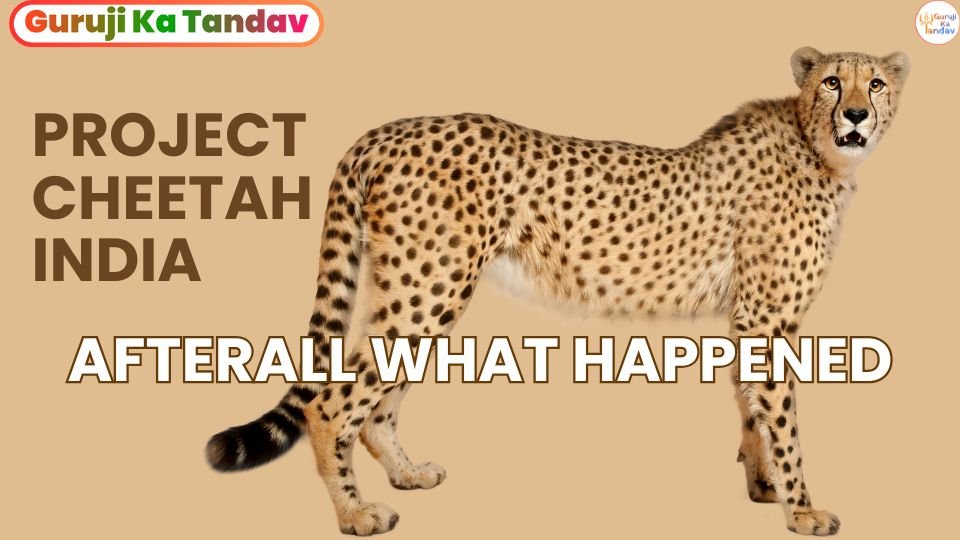
In 2022, India embarked on one of the most ambitious wildlife conservation projects in history – Project Cheetah. This initiative aimed to reintroduce the cheetah, the fastest land animal, back into India’s grasslands after it was declared extinct in 1952. This marks the world’s first intercontinental large carnivore translocation project, bringing African cheetahs from Namibia and South Africa to India’s Kuno National Park (KNP) in Madhya Pradesh.
Project Cheetah is not just about reintroducing a species, but also about restoring India’s grassland ecosystem and reviving its status as a global leader in conservation efforts. However, the project has faced significant challenges, including habitat issues, cheetah mortality, and conservation hurdles.
Let’s explore:
✅ The history of cheetahs in India
✅ Why cheetahs went extinct
✅ How the relocation process was planned
✅ Achievements and setbacks so far
✅ Future challenges and way forward
📜 History of Cheetahs in India
Cheetahs once roamed freely across India, especially in states like Madhya Pradesh, Rajasthan, Gujarat, and Uttar Pradesh. Known for their incredible speed and hunting skills, they were commonly found in open grasslands and semi-arid regions.
However, by the mid-20th century, rampant hunting, habitat destruction, and poaching led to their complete extinction in India by 1952. The Maharajas and British colonial rulers considered cheetahs as symbols of prestige and hunted them extensively. With no conservation efforts at the time, India lost one of its most iconic species.
For decades, efforts were made to bring cheetahs back, but it wasn’t until Prime Minister Narendra Modi’s leadership in 2022 that Project Cheetah finally became a reality.
🌍 The Grand Plan: Relocation of African Cheetahs to India
Since Asiatic cheetahs are now found only in Iran (and in very small numbers), the Indian government decided to relocate African cheetahs, which are genetically similar and better suited for survival.
🌿 Key Phases of Project Cheetah
✔ Phase 1 (September 2022):
- 8 cheetahs (5 females, 3 males) from Namibia arrived in Kuno National Park on PM Modi’s birthday (September 17, 2022).
- This historic relocation was monitored by top scientists, conservationists, and veterinary experts.
✔ Phase 2 (February 2023):
- 12 more cheetahs (7 males, 5 females) from South Africa were introduced into KNP.
- India and South Africa signed a long-term agreement for further cheetah translocations over the next 8-10 years.
✔ Phase 3 & Beyond:
- Plans to introduce more cheetahs every year, ensuring a self-sustaining cheetah population in India.
- Developing more protected areas across states like Rajasthan, Chhattisgarh, and Gujarat to create multiple habitats for cheetahs.
🏆 Achievements of Project Cheetah So Far
✔ First Wild-Born Cheetah Cubs in India (March 2023)
- In a historic moment, a female cheetah from Namibia gave birth to four cubs, making them the first cheetah cubs born in India in over 70 years.
✔ Successful Adaptation to Indian Conditions
- Some cheetahs have been successfully released into the wider areas of Kuno National Park, hunting and surviving in their new environment.
✔ Public Awareness and Tourism Boost
- Project Cheetah has sparked global attention, with thousands of tourists visiting Kuno National Park, boosting eco-tourism and local employment.
✔ Global Recognition of India’s Conservation Efforts
- India became the first country to relocate cheetahs across continents, showcasing strong leadership in wildlife conservation.
🚨 Challenges & Setbacks
Despite early successes, Project Cheetah has also faced several difficulties, raising concerns among conservationists.
1️⃣ Cheetah Mortality Issues
- 7 adult cheetahs and 3 cubs have died since their introduction.
- Causes include kidney-related complications, cardiac arrest, and territorial fights.
- Heatstroke during the summer also affected cheetah survival.
2️⃣ Habitat Limitations in Kuno National Park
- KNP is only 748 sq. km, which may not be enough to sustain a large cheetah population.
- Conservationists argue that more reserves should be developed in other states.
3️⃣ Human-Wildlife Conflict Risks
- Cheetahs are known to roam large distances and might stray into human settlements.
- Ensuring coexistence with local communities is a major challenge.
4️⃣ Delayed Second Phase of Translocation
- Originally, 18 more cheetahs were planned to arrive in 2024, but the relocation was postponed due to ongoing project reviews.
🆕 Latest Updates on Project Cheetah (2025)
✔ Monitoring & AI-Based Tracking:
- Advanced AI and GPS collars are being used to track cheetah movement, prevent conflicts, and detect health issues.
✔ More Protected Areas Being Considered:
- The Indian government is exploring alternative sites in Rajasthan and Madhya Pradesh to expand the cheetah habitat.
✔ New Breeding Program to Increase Population:
- Plans are underway to establish a breeding center for cheetahs, ensuring long-term genetic diversity.
✔ International Collaboration Continues:
- Experts from South Africa, Namibia, and the UK continue to advise Indian authorities on cheetah management and conservation.
🌿 Future Roadmap: Ensuring the Success of Project Cheetah
✔ Expanding Protected Areas:
- Identifying alternative habitats across multiple states to prevent overcrowding in Kuno.
✔ Minimizing Human-Wildlife Conflicts:
- Implementing community awareness programs to promote coexistence.
- Providing compensation to farmers in case of livestock attacks.
✔ Better Health Monitoring & Veterinary Support:
- Regular medical check-ups and AI-based tracking to reduce deaths.
✔ Sustainable Eco-Tourism Development:
- Promoting responsible tourism while ensuring cheetah safety.
🌟 Conclusion: A Bold Conservation Effort with a Long Way to Go
Project Cheetah is India’s most ambitious wildlife reintroduction initiative, representing a new era in global conservation efforts. While challenges remain, the project has already made history by bringing cheetahs back to India.
With continued scientific research, habitat expansion, and community support, India has the potential to successfully re-establish a thriving cheetah population.
🚀 Will India succeed in making cheetahs flourish once again?
Tell us what you think in the comments! 👇
📢 Stay tuned for more updates on India’s biggest conservation projects!
🚩 Jai Shri Ram! Vande Mataram! Bharat Mata Ki Jai! 🚩🔥