Iran, formerly known as Persia, is home to one of the world’s oldest and most influential civilizations. From ancient empires to world-famous poetry, Persians carry a deep and enduring pride in their identity. In this guide, we will explore the 10 things Persian people are most proud of, and why these elements form the very essence of their cultural pride.
Whether you are curious about Iranian heritage, or you wish to understand the Persian spirit better, this article will open doors to a rich, timeless world.
🏛️ 1. The Achaemenid Empire – Foundation of Persian Glory
Persian pride begins with the Achaemenid Empire, founded by Cyrus the Great in the 6th century BCE. This was one of the largest and most powerful empires of the ancient world.
- The empire spread from India to Europe.
- It was known for religious tolerance, road systems, and advanced governance.
- The famous Cyrus Cylinder is considered the world’s first declaration of human rights.
Persians proudly recall this golden age as the origin of their greatness.
📖 2. Persian Literature – Timeless Wisdom in Poetry and Prose
Among the 10 things Persian people are most proud of, Persian literature stands out. Iran has given the world some of its greatest literary minds.
- Ferdowsi’s Shahnameh preserves Persian myths and national identity.
- Hafez and Rumi are spiritual guides for millions, even beyond Iran.
- Saadi’s Gulistan is a classic in ethics and philosophy.
In almost every Persian home, you’ll find poetry books treasured like family heirlooms.
🍛 3. Persian Cuisine – A Rich Palette of Taste and Tradition
Persian food is a true celebration of flavor, fragrance, and tradition.
- Signature dishes include ghormeh sabzi, kebab, fesenjan, and zereshk polo.
- Ingredients like saffron, dried limes, pomegranate molasses, and rosewater give unique taste profiles.
- Meals are family-oriented, and cooking is often considered an art passed from one generation to the next.
Sharing food is a deeply emotional and cultural experience for Persians.
🎨 4. Persian Art and Calligraphy – Beauty in Every Stroke
Iranians are deeply proud of their artistic heritage, especially their calligraphy and miniature paintings.
- Persian calligraphy turns language into a visual masterpiece.
- Artworks often include poetry, nature, and geometry.
- You’ll see intricate tile work and floral designs in mosques, palaces, and books.
This blend of beauty and intellect is something Persians celebrate with immense pride.
🎶 5. Persian Music – The Sound of the Soul
Traditional Persian music plays a key role in storytelling, celebration, and emotion.
- Instruments like the setar, santur, and daf create enchanting melodies.
- Persian classical music is deeply poetic, often set to verses of Rumi or Hafez.
- Music connects people to their roots, especially those living outside Iran.
It is not just sound—it’s the soul of a people expressed in rhythm and harmony.
🏰 6. Persian Architecture – Elegance Built in Stone and Tile
Iranian architecture is a proud testament to Persian vision and aesthetics.
- Iconic structures include Persepolis, Isfahan’s Imam Mosque, and Golestan Palace.
- Characterized by domes, arches, and mosaic tiles.
- Gardens like Fin Garden in Kashan symbolize paradise on Earth.
Persians take great pride in showing how their buildings blend art, mathematics, and faith.
🧠 7. Scientific Legacy – The Minds That Shaped the World
Persians have made lasting contributions in the fields of medicine, astronomy, mathematics, and philosophy.
- Avicenna (Ibn Sina) wrote “The Canon of Medicine”, used in Europe for centuries.
- Omar Khayyam, apart from being a poet, was a mathematician who reformed the calendar.
- Scholars laid the foundation for algebra, chemistry, and optics.
This intellectual tradition is a source of deep national pride.
🗣️ 8. Persian Language – Farsi: The Soul of Persian Culture
The Farsi language is not just a tool for communication—it’s the beating heart of Persian identity.
- One of the world’s oldest living languages.
- Rich with idioms, metaphors, and lyrical beauty.
- Spoken across regions that once formed Greater Persia: Iran, Afghanistan (Dari), and Tajikistan (Tajiki).
Despite centuries of foreign invasions, the language has survived and flourished, keeping Persian culture alive.
🤝 9. Hospitality – Mehman Nawazi Is a Way of Life
If you’ve ever visited a Persian household, you know hospitality is sacred.
- Guests are treated with great warmth and honor.
- You’ll never leave without being offered tea, sweets, and an elaborate meal.
- Even modest families go out of their way to make guests feel like royalty.
Hospitality isn’t just a tradition—it’s a cultural cornerstone.
💪 10. Resilience and Perseverance – Pride in Survival
Persian history is full of challenges—from invasions to revolutions, and from sanctions to war. Yet, the Iranian people have always stood tall.
- Cultural identity has remained strong despite external pressures.
- Iranians continue to innovate, create, and celebrate life.
- The celebration of Nowruz (Persian New Year) symbolizes hope, renewal, and strength.
Resilience is not just a quality—it’s a badge of honor.
🏁 Final Thoughts: Persian Pride Is Timeless and Powerful
Understanding the 10 things Persian people are most proud of helps you appreciate a civilization that continues to influence the world in countless ways.
From Cyrus the Great to the poetry of Rumi, from saffron-scented kitchens to turquoise-tiled domes, every corner of Persian life is steeped in beauty, wisdom, and strength.
Next time you meet someone of Persian heritage, you’ll know that their pride isn’t just about the past—it’s alive in every word, flavor, and gesture they share with the world.
📞 Want to explore such rich heritage through modern branding and digital success strategies?
👉 Contact Guruji Sunil Chaudhary, Top Digital Marketing Expert and Founder of JustBaazaar for Digital Marketing Consultancy and Services.
📩 Email: sunil@justbaazaar.com
🇮🇳 Jai Sanatan! वंदे मातरम्!
🌸 Persian New Year – Nowruz: A Celebration of Renewal, Light, and Life 🌿
Nowruz (नवरोज़), meaning “New Day” in Persian, is one of the most cherished and ancient festivals celebrated not only in Iran but also across Central Asia, parts of the Caucasus, and South Asia. Rooted deeply in Zoroastrian traditions, Nowruz marks the first day of spring and the beginning of the Persian calendar — typically falling on or around March 20th or 21st. What makes Nowruz truly special is that it aligns with the vernal equinox, symbolizing perfect balance in nature — a poetic reflection of hope, harmony, and new beginnings. It’s a festival that transcends religion and politics, uniting people through shared heritage, love for nature, and the celebration of life’s renewal.
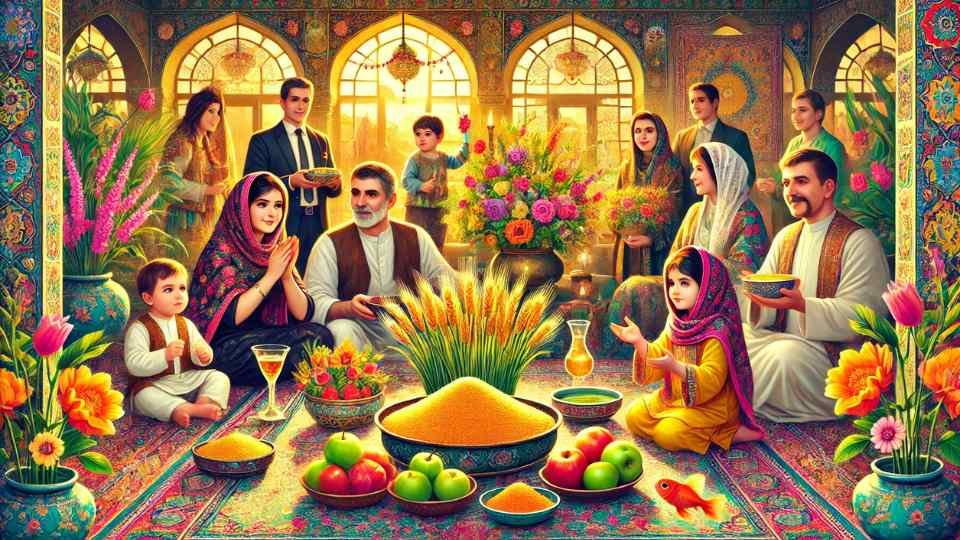
The preparation for Nowruz begins weeks in advance. Homes are thoroughly cleaned in a tradition called “khaneh tekani” (خانهتکانی) — meaning “shaking the house” — to welcome the new year with purity and freshness. One of the most symbolic and beloved aspects of Nowruz is the “Haft-Seen Table” (هفتسین), which features seven items starting with the Persian letter ‘S’ (س), such as Sabzeh (sprouts for rebirth), Seer (garlic for health), Seeb (apple for beauty)and more. Each item represents a spiritual value or blessing. Families gather around this table on the eve of Nowruz, awaiting the precise moment the equinox occurs, marking the entrance into the new year with joy, prayers, and wishes for prosperity.
Nowruz celebrations can last up to 13 days, filled with family visits, festive meals, exchanging gifts, music, dancing, and cultural traditions. On the 13th day, known as Sizdeh Bedar, families picnic in nature to ward off bad luck and welcome positivity. Children often receive Eydi (money or gifts), and elders are shown special respect. The air during Nowruz is filled with fragrance, laughter, and optimism. For Persian people, Nowruz is much more than a new year — it is a spiritual, cultural, and emotional rebirth, a reaffirmation of hope, and a deep connection to mother earth, ancestry, and the eternal rhythm of nature.