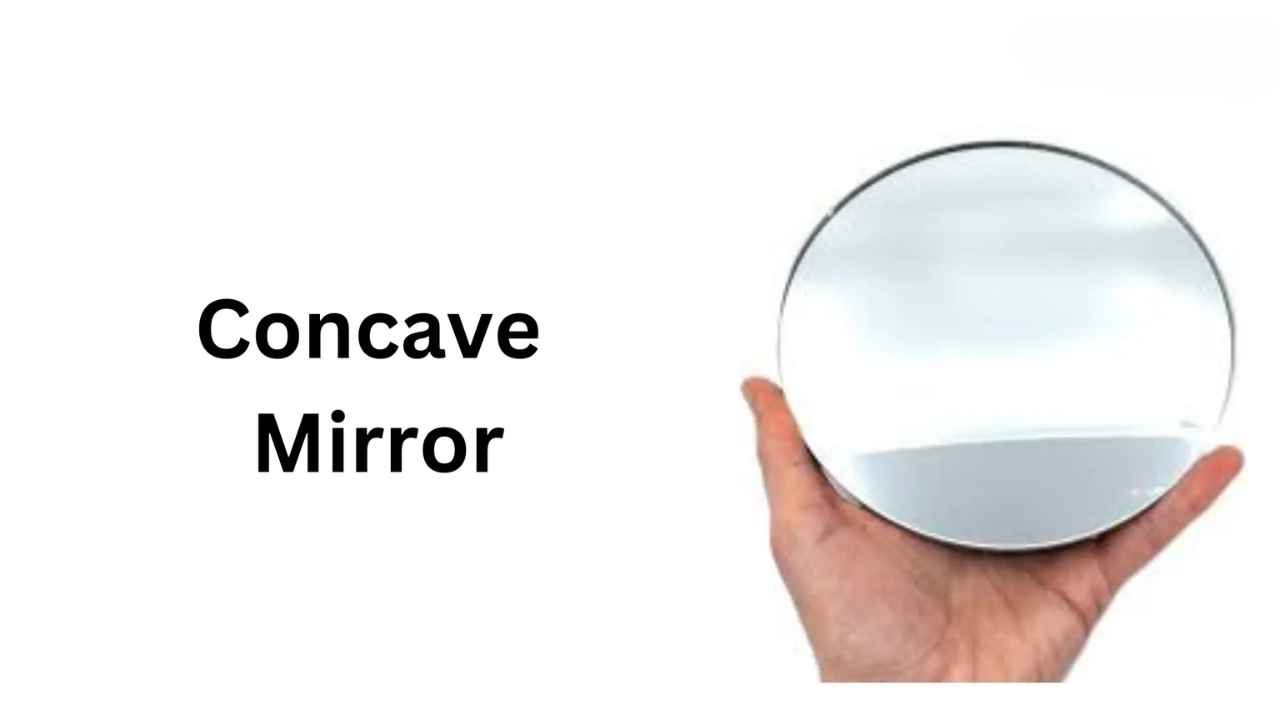
Concave mirrors are a fascinating and essential part of optical science, finding applications in various fields such as astronomy, medicine, automobile engineering, and everyday household use. Unlike convex mirrors that diverge light, concave mirrors converge light, making them ideal for producing magnified and focused images. In this detailed blog post, we will explore the various uses of concave mirrors across different domains.

Understanding Concave Mirrors
A concave mirror is a spherical mirror that has a reflective surface curved inward, resembling a cave. The unique property of concave mirrors is that they reflect parallel light rays toward a single focal point, making them useful for applications requiring focused or magnified reflections.
The behavior of a concave mirror depends on the position of the object relative to its focus (F) and center of curvature (C):
- When the object is placed beyond C, a real and inverted image is formed between F and C.
- When the object is placed at C, a real, inverted, and same-sized image is formed at C.
- When the object is placed between C and F, a real, inverted, and magnified image is formed beyond C.
- When the object is placed at F, the reflected rays become parallel, producing an image at infinity.
- When the object is placed between F and the mirror, a virtual, erect, and magnified image is formed.
These principles govern the wide range of applications of concave mirrors.
Applications of Concave Mirrors
1. In Vehicles: Headlights and Reflectors
One of the most common applications of concave mirrors is in vehicle headlights. The light source (bulb) is placed at the focus of the concave mirror, and the reflected light rays emerge as a parallel beam, ensuring a longer and more focused reach.
- Used in car headlights, motorcycle lights, and torches for better road visibility.
- Found in searchlights and flashlights to produce intense, focused beams of light.
2. In Astronomy: Reflecting Telescopes
Concave mirrors play a vital role in astronomical telescopes, particularly reflecting telescopes, which are widely used by astronomers to observe celestial objects.
- A large concave mirror collects and focuses distant light from stars and galaxies, making them visible.
- The Hubble Space Telescope and James Webb Space Telescope utilize concave mirrors to capture images of deep-space objects.
3. In Medical Applications: Ophthalmoscopes and Dental Mirrors
Concave mirrors are extensively used in medical examinations, particularly in the fields of ophthalmology and dentistry.
- Ophthalmoscopes use concave mirrors to focus light into the human eye for retinal examination.
- Dentists use concave mirrors to examine the teeth and gums, as they provide a magnified image of the inside of the mouth.
4. In Solar Concentration: Solar Furnaces and Cookers
Concave mirrors are widely used in solar energy devices due to their ability to concentrate sunlight at a single point.
- Solar furnaces use concave mirrors to focus sunlight onto a small area, generating extremely high temperatures for industrial purposes.
- Solar cookers use concave mirrors to concentrate solar heat onto cooking vessels, allowing food to be cooked efficiently without conventional fuel sources.
5. In Shaving and Makeup Mirrors
Concave mirrors are used in personal grooming products like shaving mirrors and makeup mirrors due to their ability to produce magnified images when the object is placed within the focal length.
- Used in beauty salons and households for applying makeup or shaving with precision.
- Helps in detailed grooming tasks such as tweezing eyebrows or inserting contact lenses.
6. In Microscopes and Magnifying Devices
Concave mirrors are commonly used in optical instruments such as microscopes and magnifying glasses.
- The mirrors help in converging light onto the specimen, enhancing clarity and visibility.
- Used in scientific research laboratories for microscopic observations.
7. In Theatres and Stage Lighting
Concave mirrors are used in spotlights in theatres and auditoriums to create focused and intense lighting effects.
- Helps in directing beams of light to specific areas on the stage.
- Used in projectors and film screenings to enhance visual effects.
8. In Satellite Dishes and Radar Systems
Concave mirrors are crucial in satellite communication systems where parabolic reflectors use concave principles to focus signals.
- Used in satellite dishes to collect and focus radio waves onto a receiver.
- Found in radar systems for detecting aircraft, ships, and weather patterns.
Conclusion
Concave mirrors are indispensable in modern technology, ranging from scientific instruments to everyday objects. Their ability to converge light at a single point makes them suitable for applications in illumination, magnification, and energy concentration. From vehicle headlights and telescopes to solar furnaces and shaving mirrors, the versatility of concave mirrors continues to shape various fields, proving their significance in both scientific and daily life applications.
Would you like a specific section expanded or more real-world examples included? Let me know!