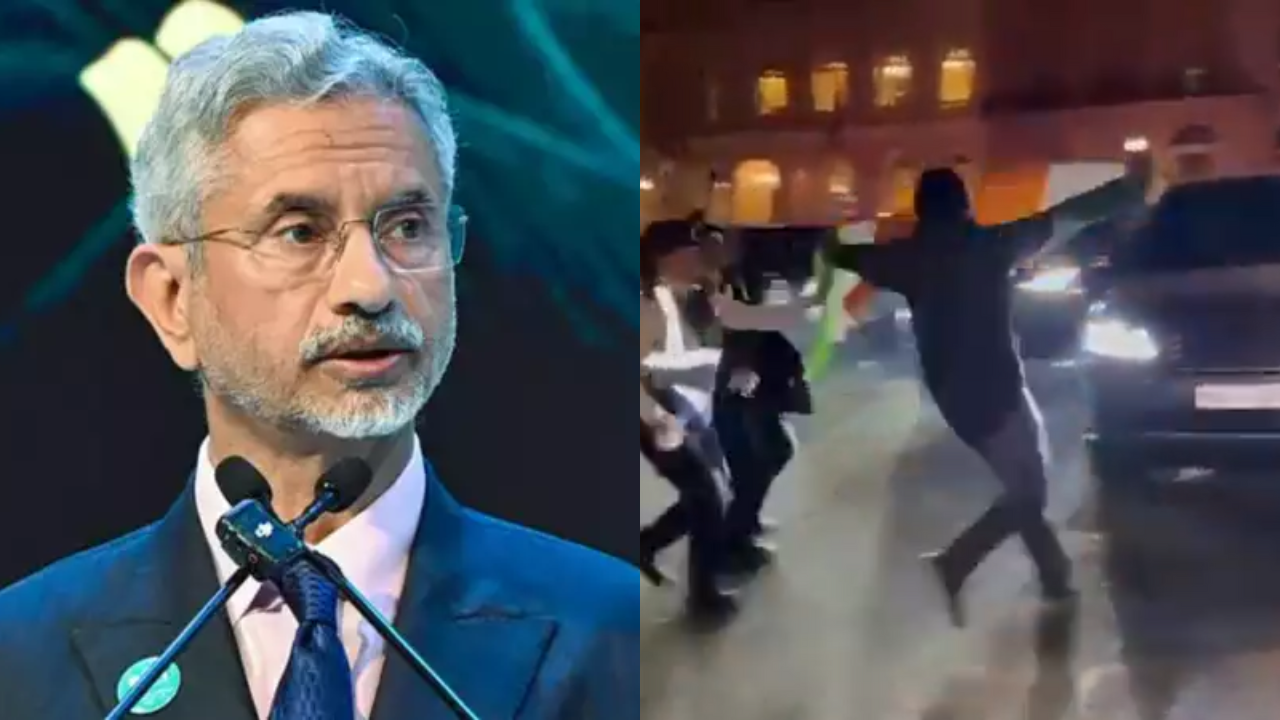
The global geopolitical landscape is undergoing a significant transformation as former U.S. President Donald Trump, known for his “America First” policies, appears to be steering the United States towards a multipolar world order. This shift, according to India’s External Affairs Minister (EAM) S. Jaishankar, aligns well with India’s strategic interests. Jaishankar, during his recent visit to London, highlighted how Trump’s approach benefits India, particularly in terms of trade, strategic autonomy, and global diplomacy.
What Is Multipolarity and Why Does It Matter?
A multipolar world is one where power is distributed among multiple global players rather than being dominated by a single superpower (unipolar) or two rival superpowers (bipolar). In the Cold War era, the world was bipolar, led by the U.S. and the Soviet Union. Post-1991, the U.S. emerged as the dominant power, creating a unipolar world. However, recent years have seen the rise of China, India, Russia, and the European Union as influential global powers, pushing towards multipolarity.
For India, a multipolar world provides greater autonomy in decision-making, reduces overdependence on any single power, and enhances its ability to negotiate on equal footing with major economies.
Trump’s Multipolar Shift: Key Factors
1. Reciprocal Tariffs and the India-U.S. Trade Deal
One of the biggest highlights of Trump’s foreign policy is his reciprocal tariff policy, which focuses on ensuring fair trade agreements. Trump has imposed higher tariffs on China and the European Union, and India is also facing similar pressures. While this move initially seemed like a challenge, Jaishankar sees it as an opportunity for India to renegotiate a favorable trade deal with the U.S.
- India is actively working on a bilateral trade agreement with the U.S. to address tariff issues.
- The removal of unnecessary trade barriers could boost India’s exports to the U.S., particularly in pharmaceuticals, IT services, and manufacturing.
- This move aligns with India’s Atmanirbhar Bharat (Self-Reliant India) initiative, reducing dependence on Chinese imports.
2. Strategic Shift in Global Alliances: The Indo-Pacific & QUAD
Trump has been a vocal critic of China’s growing influence, and his administration strongly supported India’s role in the Indo-Pacific region. Jaishankar emphasized that a multipolar world order ensures that no single country—like China—dominates international affairs.
- QUAD Alliance (India, U.S., Japan, Australia): Trump’s support for this alliance strengthens India’s position in the Indo-Pacific, countering China’s aggressive maritime expansion.
- Defense Collaboration: India and the U.S. have strengthened their military partnership, including joint military exercises and defense technology transfers.
- Economic Reshoring: As U.S. companies move supply chains away from China, India stands to gain through increased investments.
3. India’s Stand on Russia and Ukraine
Jaishankar also addressed concerns about India’s neutral stance on the Russia-Ukraine war, a position that differs from the West. Under Trump, the U.S. has signaled a shift away from direct involvement in foreign wars, focusing instead on domestic priorities. This shift benefits India as it:
- Allows India to maintain strong ties with Russia for energy and defense deals without U.S. pressure.
- Reduces expectations for India to take sides in conflicts that do not align with its strategic interests.
- Strengthens India’s role as a neutral mediator in global conflicts.
4. Global Financial System & Economic Restructuring
Jaishankar mentioned that Trump’s policy shift is also influencing global financial institutions like the World Bank, IMF, and WTO. India is pushing for reforms in these institutions to reflect the realities of today’s global economy.
- India advocates for a greater role in international financial decision-making, reducing the dominance of Western economies.
- Trump’s skepticism towards China-led financial bodies, such as the Asian Infrastructure Investment Bank (AIIB), could open doors for India to take a leadership role in alternative economic frameworks.
Challenges & Risks for India
While Trump’s foreign policy shift presents opportunities, there are also challenges:
- Uncertainty in U.S. Policy – Trump’s unpredictable decisions mean India must be prepared for sudden changes.
- Tariff Pressures on Indian Exports – While negotiations are ongoing, existing tariffs on steel, aluminum, and textiles pose a challenge.
- Balancing Act with China – India must carefully navigate its relations with China, avoiding unnecessary confrontations while leveraging the U.S. partnership.
Conclusion: A New Era for India-U.S. Relations?
Jaishankar’s statements indicate that India sees a positive shift in U.S. foreign policy under Trump. The move towards multipolarity aligns well with India’s ambitions as a global power, offering greater diplomatic flexibility, economic opportunities, and strategic advantages.
India must, however, remain cautious and pragmatic, ensuring that while it benefits from these changes, it does not become overly dependent on any single global power. As the world moves towards a multipolar order, India’s strategic autonomy and proactive diplomacy will be key in shaping its future.