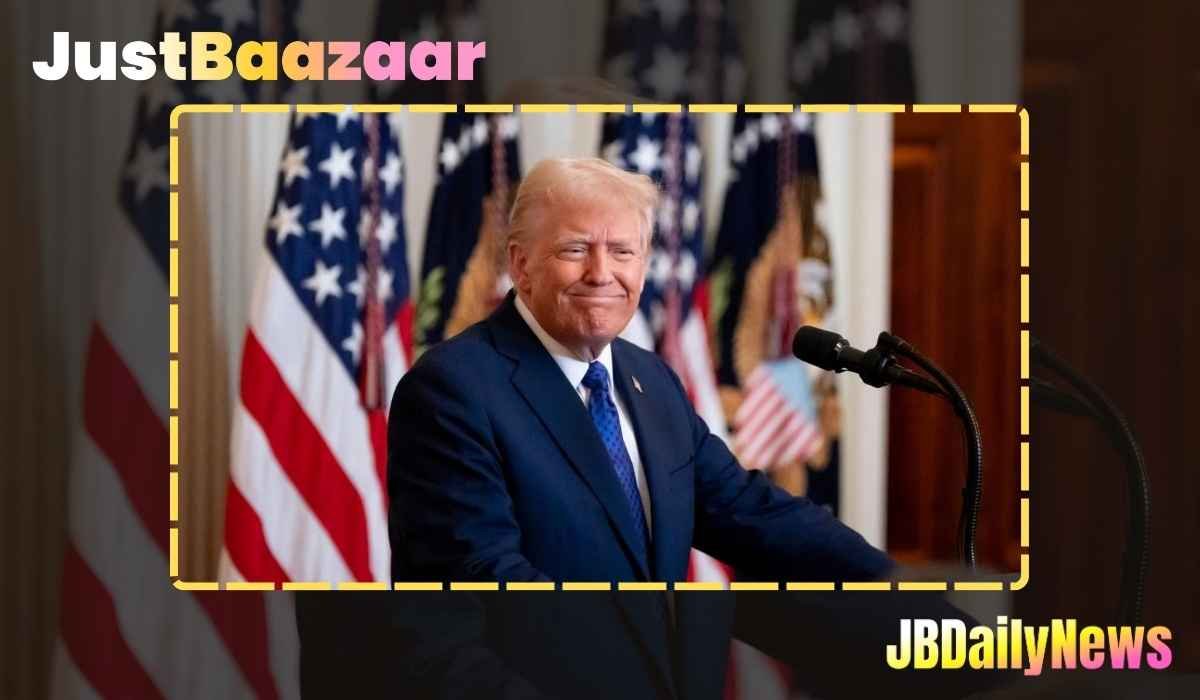
A comprehensive round-up of the latest developments, economic analyses, expert opinions, and geopolitical implications
🔴 What’s Happening?
On August 1st, 2025, former U.S. President Donald Trump announced a 25% tariff on Indian imports. He cited reasons such as trade imbalances and India’s continued oil purchases from Russia. The move comes with an additional “penalty tariff” directed at countries violating U.S. sanctions—India is among the most impacted.
US-India Trade Crisis: Full Coverage on Trump’s 25% Tariff Impact

While India’s trade competitors like Pakistan and Bangladesh saw tariff cuts or minimal rates, India now faces a substantial trade cost burden. The executive order has shaken confidence in bilateral trade relations and triggered reactions from Indian policymakers, industry bodies, and global observers.
📉 Economic Impact: Will India’s GDP Take a Hit?
Leading economic reports predict significant, though not catastrophic, effects:
Deccan Herald and Times Now estimate that India’s GDP growth could slip below 6% if the tariffs persist.
SBI Research and Mint project a 25–30 basis points (bps) decline in India’s FY26 GDP growth.
Export losses due to the tariff are projected to cost 0.3–0.4% of India’s GDP.
Sectors Hit Hardest:
Seafood & Aquaculture (Kerala, Andhra Pradesh)
Spices
Telecom Equipment
Textiles & Engineering Goods
Market Impact:
Volatility in equity markets
Exporters seeking relief packages from the government
Concerns over the weakening rupee due to capital outflows
📦 Trade Tensions: Indian Exporters React
Exporters are already feeling the heat:
Orders from the U.S. are being delayed or cancelled.
Export-focused states like Kerala and Andhra Pradesh are experiencing job losses in seafood and agriculture sectors.
Andhra CM Chandrababu Naidu has promised relief to affected farmers.
Export bodies have asked for duty rebates and interest-free working capital to survive the storm.
🤝 Political Calculus: Will India Bow or Bargain?
India’s Ministry of External Affairs has stated that India will continue dialogue, but not under threats or coercion. India is seen to be in a relatively strong negotiating position, due to:
A large domestic market
Significant defense and tech collaborations with the U.S.
A multi-aligned foreign policy model that includes ties with Russia and the EU
However, think tanks like ThePrint and ORF argue India needs to recalibrate its global power perception—shedding illusions of influence and focusing on strategic assertiveness.
🌍 Geopolitical Dominoes: The Russian Oil Angle
A central trigger for Trump’s tariffs is India’s oil trade with Russia. The U.S. claims India is bypassing sanctions, which goes against American interests.
Yet experts point out that:
India pays in INR or UAE Dirhams, not dollars.
Russia is now a top supplier due to discounted rates.
Cutting oil trade could hurt India’s energy security.
This has opened a debate on whether the U.S. is willing to jeopardize strategic relations in the Indo-Pacific over economic posturing.
💬 Expert Voices: Opinions & Editorials
Firstpost: India must not surrender to a Trump driven by ego and isolationism.
The Hindu: Explains how the tariff will affect both Indian exporters and American consumers.
Free Press Journal: While impactful, India’s export ecosystem is resilient.
The Wire: Modi must aim for a trade ceasefire, not escalation.
Business Today: Top business voices warn Trump is “picking a fight with the wrong country.”
🧮 By the Numbers
25% tariff on Indian exports to the U.S.
$2400/year – The estimated rise in annual household spending for U.S. consumers due to tariffs (SBI Report).
0.3–0.4% – Estimated GDP loss to India due to reduced exports.
25–30 basis points – Possible GDP growth dip in FY26 (SBI).
Top hit sectors: Seafood, spices, telecom, textiles, engineering goods.
🔮 What Next? India’s Strategy Moving Forward
The Indian government has asked ministries to prepare a “give and take” list—highlighting sectors where India can offer concessions and where it must hold firm.
Other steps underway:
Negotiations with U.S. diplomats to carve out exceptions or reduce tariff coverage.
Increased outreach to EU, ASEAN, and African Union to diversify export markets.
Incentivizing U.S. companies to invest more deeply in Indian manufacturing under “Make in India.”
📌 Conclusion
Donald Trump’s tariff escalation has strained U.S.-India economic ties and added volatility to trade relations. Yet, India’s firm stance, combined with ongoing diplomatic efforts, may turn the crisis into a catalyst for trade diversification and strategic recalibration.
Rather than seeing this as a setback, India appears ready to use it as a launchpad for self-reliance, greater resilience, and strategic assertiveness on the global stage.