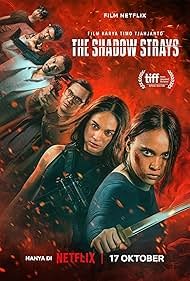
The Shadow Strays, released on October 17, 2024, is a Netflix original action-thriller directed by Timo Tjahjanto, known for his intense action-packed films (The Night Comes for Us). The film stars Aurora Ribero as “Codename 13,” a highly trained 17-year-old assassin grappling with morality after a botched mission in Japan. Partnered with a young boy named Monji, she embarks on a high-octane journey to rescue him from the clutches of a crime syndicate, turning against her mentor and the very organization that trained her, the Shadow.

Cast and Performances
Aurora Ribero brings raw intensity to the role of Codename 13, a character battling inner turmoil while taking on life-or-death situations. Her co-star, 11-year-old Monji (played by Ali Fikry), delivers an emotionally charged performance that adds heart to the film’s otherwise action-heavy narrative. Supporting performances from Hana Malasan as 13’s mentor and the film’s antagonist create a palpable tension that elevates the stakes throughout the movie.
Direction and Screenplay
Timo Tjahjanto is known for blending violence with emotion, and The Shadow Strays is no exception. His direction captures the chaos of the action sequences while balancing the quieter moments of character development. The film’s pacing is relentless, moving from one explosive set piece to another, but Tjahjanto also allows space for character growth, especially between 13 and Monji, whose bond becomes the emotional core of the movie.
The screenplay mixes slick action with deeper questions about loyalty and morality, giving the film more emotional weight than the average action thriller. The Shadow Strays offers a fresh perspective by centering on a young female assassin’s journey, exploring her conflict between duty and conscience.
Cinematography and Visuals
The film’s cinematography captures the neon-lit, gritty streets of Japan, creating a dynamic visual backdrop for the action. The choreography is fast-paced and brutal, with close-quarters combat scenes that feel visceral and intense. The use of dynamic camera angles keeps the audience engaged, particularly during the film’s high-octane chase sequences.
The visual effects are polished, with the sleek, almost cyberpunk aesthetic fitting the tone of the story perfectly. Tjahjanto’s talent for visual storytelling shines through, especially in the quieter moments when the emotional distance between characters is reflected in the cold, minimalist environments.
Sound Design and Score
The sound design enhances the tension, with the soundtrack blending high-energy electronic beats during action scenes with quieter, melancholic tones during the emotional beats. The score, composed by Fajar Yuskemal and Aria Prayogi, works to amplify the mood, punctuating each fight sequence with hard-hitting rhythms while allowing softer moments to breathe.
Themes and Analysis
At its core, The Shadow Strays is about redemption and the cost of violence. Codename 13’s journey from ruthless assassin to a protector of the innocent is a familiar trope, but Tjahjanto’s exploration of her internal conflict feels fresh. Themes of loyalty, betrayal, and the struggle for identity in the face of dehumanizing circumstances are prevalent throughout the film, making it more than just an action-packed thrill ride.
Box Office Predictions
The Shadow Strays debuted on Netflix, where it is poised to capture a large global audience, particularly fans of action-thrillers. With Tjahjanto’s rising reputation in the action genre, the film could perform exceptionally well in Southeast Asia, where both the director and the genre have strong followings. Domestically, it is likely to resonate with fans of female-led action films, especially those who enjoyed Atomic Blonde or The Old Guard.
Given Netflix’s global reach, The Shadow Strays is expected to be a popular streaming hit, especially with Tjahjanto’s loyal fanbase tuning in for his signature action style.
Conclusion
The Shadow Strays is a high-octane, emotionally charged action-thriller that blends intense combat with a compelling character arc. Aurora Ribero’s standout performance and Timo Tjahjanto’s razor-sharp direction make this a must-watch for fans of the genre. With slick visuals, tight pacing, and an exploration of deeper moral themes, this film stands out among Netflix’s October releases.
Cast and Performances in The Shadow Strays (2024)
One of the standout elements of The Shadow Strays is its diverse and compelling cast, which helps anchor the film’s relentless pace and high-stakes narrative. The performances, especially those of the lead actors, infuse the film’s action-heavy plot with emotional depth and character nuance.
Aurora Ribero as Codename 13
Aurora Ribero shines in her role as the 17-year-old assassin, Codename 13. This complex character is more than just a killing machine, and Ribero does an excellent job of portraying 13’s internal conflict. Throughout the film, we witness her struggle with guilt, trauma, and an emerging moral compass that complicates her ability to follow orders blindly.
Ribero’s ability to combine stoicism with subtle expressions of vulnerability adds a crucial layer of empathy to her character. This balance is key to keeping the audience invested in her journey. Despite being a trained killer, 13’s emotional turmoil—especially after meeting Monji, an orphaned boy—humanizes her, giving the audience a glimpse into the humanity beneath the surface of a cold-blooded assassin
. Ribero’s performance is both physical and emotional; she handles the intense fight choreography with finesse while maintaining a brooding intensity that makes 13 a compelling protagonist.
Ali Fikry as Monji
Ali Fikry, playing Monji, an 11-year-old boy whose mother was murdered by a crime syndicate, brings emotional weight to The Shadow Strays. His performance acts as the emotional core of the film, contrasting the relentless violence around him. Fikry’s Monji is vulnerable yet determined, making his character the perfect foil to Ribero’s hardened 13. Their developing bond becomes one of the film’s few emotional anchors, and Fikry’s innocent, yet strong-willed portrayal gives the audience something to root for amid the chaos
.
His portrayal of grief and desperation is heartbreaking, and the chemistry he shares with Ribero elevates many of the film’s quieter moments. Fikry delivers a nuanced performance, ensuring that Monji never feels like a plot device but rather a fully realized character with depth and agency. The audience feels for him, and his motivations feel genuine, adding urgency to 13’s mission.
Hana Malasan as Umbra
Hana Malasan plays Umbra, the mentor who trained Codename 13. While her screen time is more limited compared to the leads, her presence looms large throughout the film. As the strict, no-nonsense trainer, Malasan delivers a chilling performance, balancing authority with hints of empathy toward her pupil. Despite her tough exterior, there are moments where Umbra’s care for 13 shines through, creating an interesting dynamic between master and apprentice
.
However, Malasan’s character could have been explored more deeply, especially given her importance in shaping 13. Her sudden reappearance toward the film’s climax, after being sidelined for much of the second act, feels slightly underdeveloped. Nevertheless, Malasan does a great job of embodying the stoic mentor archetype, with enough nuance to leave a lasting impression.
Supporting Cast and Antagonists
The villains in The Shadow Strays are somewhat underutilized, serving more as targets for 13’s wrath than fully fleshed-out characters. While their motivations are clear—serving a crime syndicate that exploits and brutalizes people like Monji’s mother—the film’s focus remains firmly on 13’s internal struggle and her violent journey toward redemption. Some critics have noted that the film could have benefited from more dynamic antagonists, as the villains lack the same depth and complexity seen in the protagonists
.
Nonetheless, the action sequences, powered by an ensemble of actors and stunt performers, contribute to the film’s visceral intensity. These supporting characters, despite their limited roles, help create an environment where no one is safe, heightening the stakes of every confrontation.
Performance Highlights
- Aurora Ribero’s versatility: Ribero’s portrayal of Codename 13 is multifaceted, balancing action with emotional depth.
- Ali Fikry’s emotional resonance: Fikry offers a standout performance that injects heart into the narrative.
- Hana Malasan’s presence: Malasan, though underused, portrays the mentor role with an authoritative yet compassionate edge.
Overall, The Shadow Strays relies heavily on its performances to elevate the straightforward, action-packed plot. Ribero and Fikry, in particular, anchor the film with their emotional depth, making this violent thriller more than just a typical action spectacle.
Direction and Screenplay in The Shadow Strays (2024)
Timo Tjahjanto’s Signature Direction
Timo Tjahjanto, an Indonesian director known for his visceral filmmaking, once again proves his mastery of ultra-violent action in The Shadow Strays. Tjahjanto, who previously directed films like The Night Comes for Us and May the Devil Take You, has built a reputation for blending brutality with raw emotion. In The Shadow Strays, he brings this trademark style to the forefront, immersing the audience in a chaotic yet tightly controlled narrative.
From the opening moments, Tjahjanto throws viewers into the deep end of the action pool with a failed assassination attempt that quickly escalates into carnage. His direction thrives on kinetic energy, capturing the intensity of hand-to-hand combat and large-scale action sequences with a precision that leaves little room to breathe. Whether it’s a flurry of fists or a high-speed chase, every frame is meticulously crafted to deliver maximum impact
.
Tjahjanto’s action choreography is a standout element of the film. Drawing from his experience in horror and action, he treats violence like an art form, often blurring the lines between action thriller and horror. The fights are fast-paced, bone-crunching affairs, shot with unflinching detail. This approach elevates The Shadow Strays beyond the typical action movie; it’s more of a sensory assault. His camera work, tight framing, and use of long takes give the audience an up-close experience of the brutality without feeling disorienting. However, despite the unrelenting pace of the action, Tjahjanto knows when to pull back, allowing moments of reflection that offer breathing room amid the chaos
.
Beyond the action, Tjahjanto’s direction shines in his portrayal of character relationships, particularly the bond between 13 and Monji. He balances the emotional arcs with the explosive set pieces, creating a narrative that’s as much about survival as it is about human connection. The quieter moments between 13 and Monji allow the film to explore deeper themes, such as loyalty, guilt, and morality, while providing contrast to the relentless pace of the action
.
Screenplay: A Blend of Action and Emotion
The screenplay of The Shadow Strays complements Tjahjanto’s directorial vision by providing a structure that allows both intense action and thoughtful character development. Co-written by Tjahjanto, the script stays true to his style of blending visceral, hard-hitting action with emotionally resonant moments. While the plot itself—a young assassin torn between duty and conscience—follows familiar tropes, it is the execution that sets it apart.
The story centers around Codename 13, a young assassin who develops a conscience after a failed mission. Her relationship with Monji, an 11-year-old boy, becomes the heart of the narrative, offering a fresh take on the “protector and ward” dynamic often seen in action films. The screenplay smartly uses this relationship to explore themes of loyalty and morality, elevating the stakes beyond simple revenge
.
Tjahjanto’s screenplay also excels in world-building. The Shadow Strays teases a larger universe of assassins and crime syndicates, suggesting a rich backstory without bogging down the narrative in exposition. This world-building, combined with 13’s internal conflict, offers more depth than the average action-thriller. However, some critics have noted that while the action is relentless, the emotional depth could have been explored further. The film touches on deeper questions of loyalty and morality but never fully dives into these themes, leaving some of the character development feeling slightly undercooked
.
Despite these minor shortcomings, the screenplay’s pacing keeps the audience engaged. The relentless action sequences are interspersed with moments of introspection that allow the characters to breathe, preventing the film from becoming one-note. The balance between slick, high-octane action and emotional beats ensures that The Shadow Strays appeals to a wide audience—those seeking visceral thrills as well as viewers looking for a character-driven narrative
.
Pacing and Structure
One of the most notable aspects of the screenplay is its pacing. The film is relentless in its pursuit of action, often moving from one set piece to the next without pausing for long. While this can be exhilarating, it also risks feeling overwhelming. However, Tjahjanto manages to keep the momentum going by introducing just enough character development to keep the audience invested. The screenplay’s structure mirrors this pacing, with the quieter moments between 13 and Monji acting as the glue that holds the story together
.
Critics have pointed out that the 2.5-hour runtime could have been tighter, especially given the simplicity of the plot. Some subplots, such as Umbra’s relationship with 13, feel underdeveloped, hinting at potential backstories that are never fully explored. Despite these pacing issues, the film’s world-building and character arcs ensure that it remains engaging throughout
.
Themes and Emotional Depth
While The Shadow Strays is primarily an action film, its screenplay subtly weaves in deeper thematic elements. The film explores the emotional toll of being an assassin, particularly for a young woman like 13, who is still grappling with the trauma of her violent upbringing. The screenplay raises questions about loyalty—both to her mentor, Umbra, and to the shadowy organization that trained her. At the same time, 13’s growing attachment to Monji forces her to question her moral compass, ultimately leading to her internal struggle between duty and compassion
.
The themes of loyalty and morality are central to the film, with the screenplay constantly pushing 13 to confront her beliefs about right and wrong. This thematic depth, while sometimes overshadowed by the film’s breakneck pacing, adds a layer of complexity to what could have been a straightforward action film. The screenplay, while not perfect, elevates The Shadow Strays into a thought-provoking narrative that keeps audiences engaged long after the credits roll.