Introduction: The Rise of a New Troika
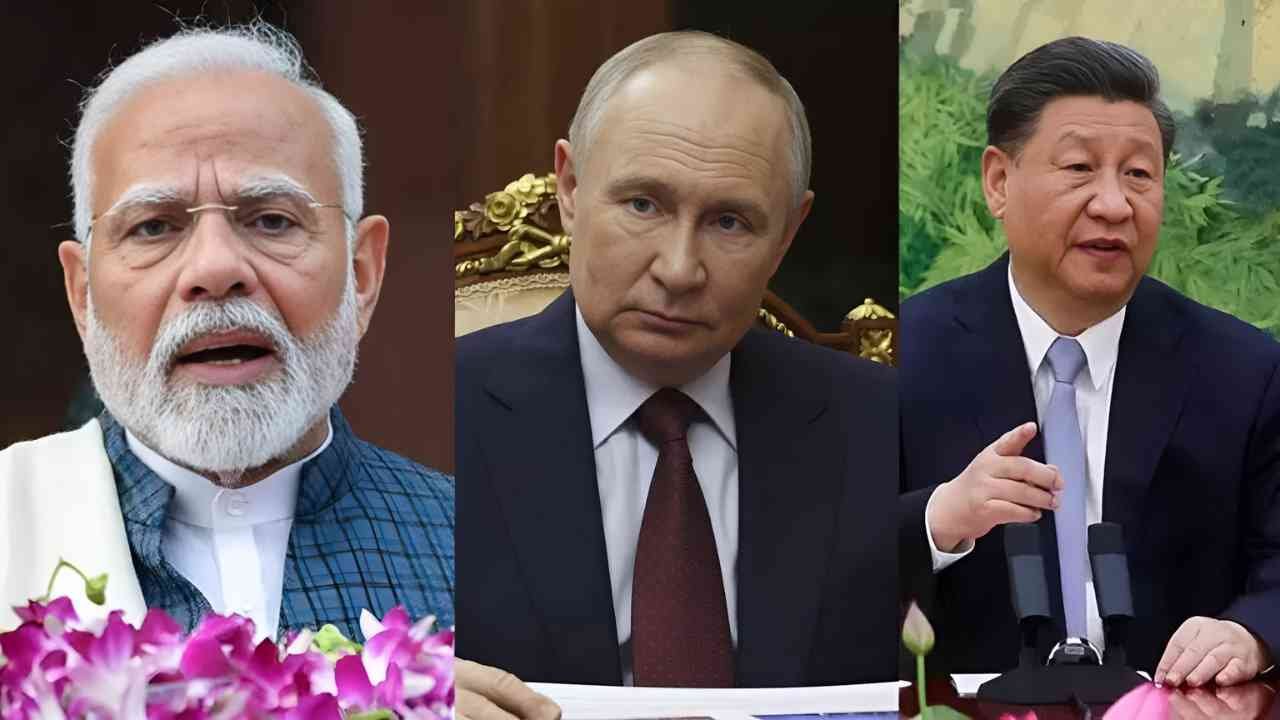
In recent times, the world has witnessed a significant shift in the global power dynamics. The three countries—India, China, and Russia—have emerged as a powerful trio shaping the international order. This alliance, often referred to as a troika (a Russian term meaning a chariot pulled by three horses working in unison), symbolizes strength, coordination, and shared objectives among these nations.
The most recent developments, such as the phone call between Russian President Vladimir Putinand Indian Prime Minister Narendra Modi, discussions involving China’s Foreign Minister, and upcoming summits like the SCO (Shanghai Cooperation Organization) meeting, all indicate that this troika is working quietly but decisively to establish a new geopolitical balance.
In this detailed analytical blog written in a simple, global English language and presented in the CBS style, we will explore:
The significance of the India-China-Russia relationship
Key recent events that highlight this alliance
The geopolitical and economic strengths of these countries
How this troika challenges existing global powers, especially the USA
What this means for the future of international diplomacy
Part 1: The Foundation of the Troika — Diplomacy and Friendship
The troika is not new in concept but is gaining fresh importance due to recent global uncertainties. The phone call between Putin and Modi was more than a courtesy; it was a strategic update. Putin shared insights from his long three-hour meeting with former American President Donald Trump in Alaska, reinforcing that the dialogue between Russia and the USA has ripple effects globally—and India is a crucial player in this conversation.
What does this tell us?
The strong personal chemistry and partnership between Modi and Putin are critical to fostering trust and transparency.
India is recognized as a key geopolitical factor, a heavyweight player in global politics, and not just a passive observer.
Russia considers India important enough to keep informed about major diplomatic developments involving the USA.
This foundation of trust is essential for a unified front on larger issues like global peace, security cooperation, and military partnerships—topics discussed during the call.
Part 2: China’s Role & High-Level Engagements
China, the world’s largest manufacturing hub and an economic giant, is a vital partner in this troika. Chinese Foreign Minister Wang Yi recently visited India after a hiatus of three years, signifying thawing relations. His meetings with India’s Foreign Minister S. Jaishankar, Prime Minister Modi, and National Security Advisor Ajit Doval mark a diplomatic breakthrough.
Key agenda points included:
Resolving long-standing border disputes peacefully.
Strengthening economic and trade ties that benefit both nations.
Working together for a multipolar world where no single country, like the USA, dominates global affairs.
India’s position in the troika is crucial because of its acceptance and trustworthiness globally—often surpassing even China and Russia in diplomatic acceptance. India is the world’s largest democracy, adding a different flavor to this alliance and appealing to a broader set of nations.
Part 3: Economic & Military Strengths Combined
The combined GDP and military power of India, China, and Russia already represent a formidable force.
India’s GDP stands at around ₹356 lakh crore
China’s GDP at approximately ₹135 lakh crore
Russia’s GDP near ₹176 lakh crore
In manufacturing and production, India and China are two of the world’s fastest-growing hubs, driving global supply chains. Russia is a leader in strategic resources: minerals, oil, and rare earth reserves.
Military power is equally impressive:
Russia has the world’s second-largest army
China has the third-largest
India boasts the fourth-largest and one of the most powerful forces globally
Together, they hold potential to shape diplomatic and security policies worldwide, pushing for a more balanced, multipolar geopolitical order.
Part 4: The Troika vs. USA’s Global Dominance
The troika’s formation significantly challenges the unipolar dominance of the USA. Their common stance is clear:
Resist one-nation supremacy in global diplomacy.
Push for reformed multilateralism that includes multiple powers sharing global responsibilities.
Advocate for peaceful conflict resolution and cooperation on international terrorism and economic stability.
Interestingly, it is former President Donald Trump’s diplomatic initiatives that indirectly facilitated the troika’s formation through his meetings with Putin, which led to better communication and transparency among these powers.
Part 5: Continuing Challenges — The India-China Border Dispute
Despite growing cooperation, the India-China border dispute remains an unresolved challenge. Both nations agree on maintaining peace but are firm that territorial integrity must be respected. This issue often becomes a delicate balancing act between diplomacy and national security.
India and China have realized the need for dialogue, and recent visits and meetings show willingness on both sides to de-escalate tensions while continuing economic cooperation.
Part 6: The Importance of the SCO Summit
The upcoming SCO summit, where Modi is expected to meet Xi Jinping, will be a critical moment. This will be the first official visit by Modi to China in seven years, highlighting a potential thaw in previously frosty relations.
The SCO plays a key role in:
Promoting regional security
Enhancing economic ties among member countries
Managing collective responses to global challenges like terrorism and climate change
India’s proactive engagement at the SCO solidifies its role as a leader in Asian diplomacy and underlines the importance of the troika in creating a new world order.
Part 7: Why This Troika Matters Globally
This alliance sends powerful messages to the world:
The era of unipolar global dominance is shifting to multipolarity.
Collaboration among countries with different political systems and economic models is possible when there’s shared interest.
India gains significant leverage on global platforms by being actively engaged with Russia and China, balancing relations rather than aligning exclusively with any superpower.
For emerging economies and developing nations, this troika symbolizes that power is accessible through diplomacy, strategic partnerships, and mutual respect.
Conclusion: The Future of Global Power Lies in Troikas
The India-China-Russia troika marks a historic shift in global geopolitics. It is fueled by:
Strategic friendship and transparency between leaders.
Economic and military complementarities.
Shared vision for multipolarity instead of American hegemony.
Though complexities like the India-China border dispute remain, diplomatic channels are improving. With upcoming summits and meetings, the troika’s influence is set to grow, signaling a more balanced and cooperative global order.
India’s role, backed by its democratic legitimacy and diplomatic acceptance, is pivotal in this alliance. The world must watch this evolving troika, as it rewrites the rules of international relations in the 21st century.
This detailed analysis in CBS Coach Sunil Guruji’s style aims to simplify complex geopolitics into actionable understanding for global learners, professionals, and citizens wishing to comprehend the new world order in easy English.