Farting — also called flatulence — is a perfectly natural part of human (and even animal) life. While it’s often the subject of jokes, it’s also a fascinating biological process linked to digestion and overall health.
In this article, you’ll discover 12 interesting, science-backed facts about farting that might just change the way you think about it.
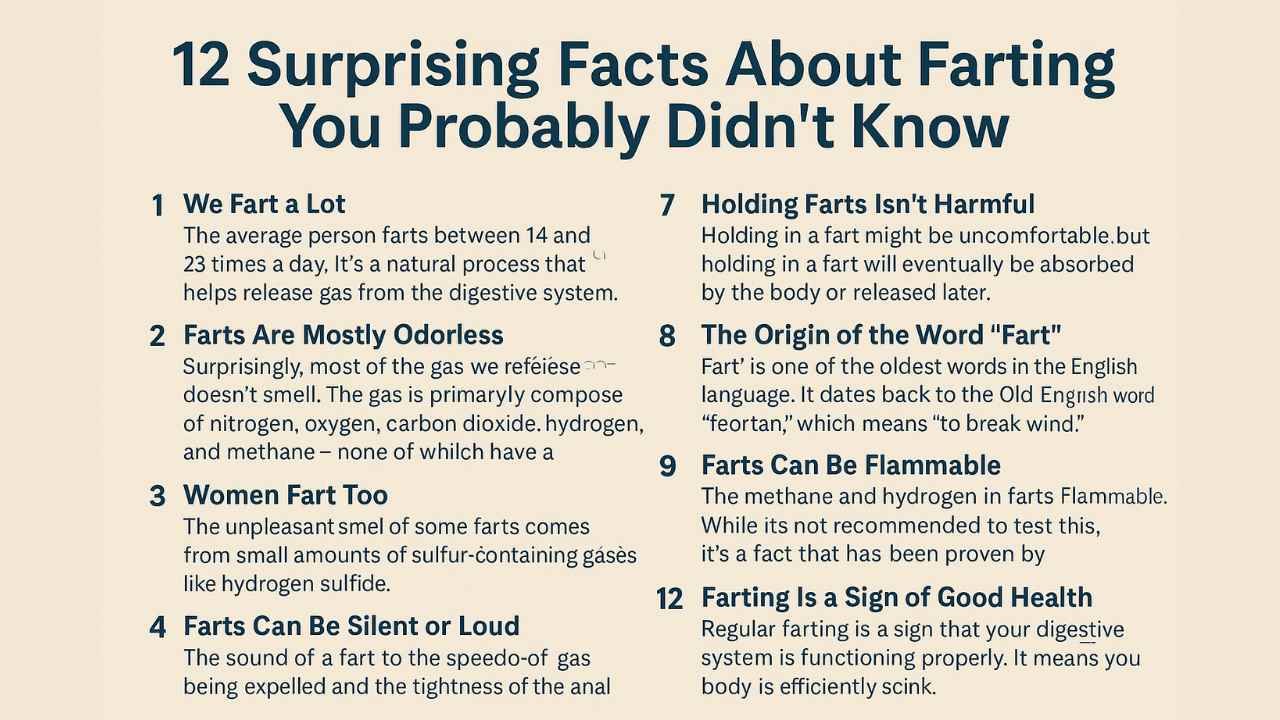
1. You Fart More Than You Think
On average, a healthy adult farts 14 to 23 times per day. This is simply your digestive system releasing excess gas — nothing to be embarrassed about.
Quick Fact: The amount can vary based on your diet, activity level, and gut bacteria.
2. Most Farts Have No Smell
Believe it or not, most of the gas you release is odorless. It’s made up mainly of nitrogen, oxygen, carbon dioxide, hydrogen, and methane — none of which have a strong odor.
3. Sulfur Causes the Smell
When a fart does smell, it’s usually because of sulfur-containing gases like hydrogen sulfide. Foods rich in sulfur — such as eggs, meat, garlic, and cabbage — can make farts smell stronger.
4. Men and Women Fart Equally
There’s a common myth that women don’t fart as much as men. In reality, studies show both genders produce about the same amount of gas daily.
5. Volume Depends on Muscle and Speed
A fart can be silent or loud depending on the speed of the gas and the tightness of your anal sphincter muscles. That’s why some farts are barely audible, while others… not so much.
6. Nighttime Farting Is Common
Gas tends to pass more freely at night while you sleep. This is because your intestinal muscles relax, making it easier for gas to escape.
7. Holding in a Fart Isn’t Dangerous
Although it may feel uncomfortable, holding a fart won’t harm you. The gas is either absorbed into your bloodstream and expelled through your lungs or released later.
8. The Word “Fart” Is Ancient
The English word fart comes from the Old English “feortan,” meaning “to break wind.” It’s one of the oldest words in the English language still in use today.
9. Yes, Farts Can Be Flammable
Because they can contain methane and hydrogen, farts are technically flammable. But — for safety reasons — don’t try to test this at home!
10. Your Diet Shapes Your Farts
Foods high in fiber (like beans, lentils, broccoli, and whole grains) can increase gas because they take longer to digest and are fermented by gut bacteria.
11. Animals Fart Too
It’s not just humans — many animals fart, including cows, elephants, and even termites. In fact, cows produce large amounts of methane as part of their digestion.
12. Farting Can Be a Sign of Good Health
Regular farting means your digestive system is active and working well. It’s a sign that your body is processing food efficiently and your gut bacteria are doing their job.
Final Thoughts
Farting might seem like a silly topic, but it’s actually a fascinating reflection of how your body works. It’s a natural, healthy process — and a reminder that digestion is one of the most important systems in your body.
So, next time it happens, you can smile knowing it’s just your body doing its job!