Apple has officially launched the iPhone 16e, a smartphone designed to cater to users looking for a balance between premium features and affordability. This device marks a significant shift in Apple’s product strategy, replacing the iPhone SE series and offering a more AI-centric experience at a competitive price.
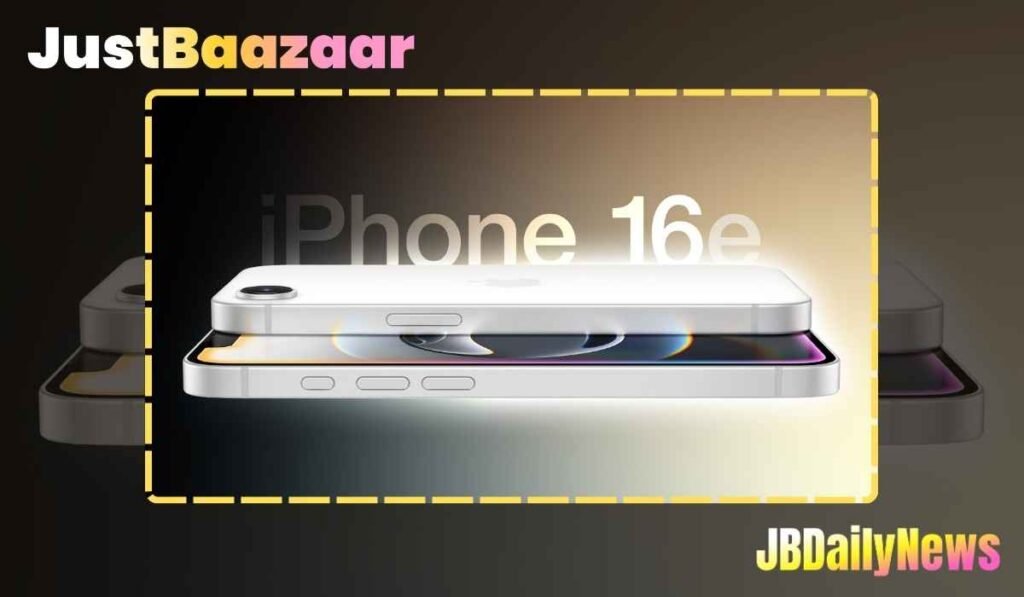
With the increasing competition from Chinese smartphone manufacturers, Apple aims to reclaim market share in the mid-range segment, especially in key markets like India and the U.S. Let’s dive into the details of the iPhone 16e and explore whether it lives up to the expectations.
🔹 iPhone 16e: Key Highlights
- A18 Chipset – A next-gen processor built for AI capabilities
- 48MP Fusion Camera – Improved computational photography for high-quality images
- C1 Modem – Apple’s first in-house modem, reducing dependence on Qualcomm
- Supercharged Battery Life – Optimized power efficiency for extended use
- No MagSafe – A controversial omission for wireless charging users
- Pricing & Variants – Starts at $599 (₹59,900 in India)
- Launch Date – Available for pre-orders since February 21, sales begin February 28
🔹 Design & Display: A Fresh Look
Apple has moved away from the old SE design, giving the iPhone 16e a more modern aesthetic. Unlike its predecessor, which retained the Home Button, the 16e features a 6.1-inch OLED display with slimmer bezels, making it feel closer to the iPhone 14.
However, Apple has opted out of ProMotion, meaning the display is still locked at 60Hz. This is a notable drawback when compared to competitors like OnePlus and Samsung, which offer 120Hz refresh rates even in budget-friendly devices.
🔹 Performance: A18 and AI Integration
One of the biggest selling points of the iPhone 16e is its A18 chipset, which brings Apple Intelligence (AI) capabilities to a more affordable device. While not as powerful as the A18 Pro in the iPhone 16 lineup, this processor ensures that features like on-device Siri processing, Live Text, and AI-driven image enhancements work seamlessly.
Apple has also made a bold move by introducing the C1 Modem, its first in-house modem, which helps the company move away from Qualcomm’s 5G chips. However, early reports suggest that North American users may experience weaker 5G connectivity, raising concerns about its real-world performance.
🔹 Camera: 48MP Fusion System
The iPhone 16e adopts a 48MP primary sensor, a significant upgrade from the 12MP camera found in previous budget iPhones. Apple has integrated Fusion Processing, allowing for improved low-light performance and computational photography enhancements.
Key Camera Features:
- Night Mode and Smart HDR for better low-light photography
- Cinematic Mode with 4K recording at 30fps
- Action Mode for stabilized video recording
- No Telephoto or LiDAR – features reserved for higher-end models
While it lacks a telephoto lens, the improved software processing should deliver competitive photography results in most scenarios.
🔹 Battery & Charging: Big Upgrade, But No MagSafe
Apple claims that the iPhone 16e has supercharged battery life, lasting two hours longer than the iPhone SE 3. However, Apple has removed MagSafe support, a controversial decision that may disappoint users who rely on MagSafe accessories.
Charging Options:
- USB-C Charging – A major shift from the Lightning connector
- No MagSafe, but supports Qi wireless charging
- Fast Charging – 50% charge in 30 minutes with a 20W adapter (sold separately)
While the battery upgrade is a welcome improvement, the lack of MagSafe might push users toward third-party wireless chargers.
🔹 Pricing & Availability
Apple is positioning the iPhone 16e as a budget-friendly alternative to the standard iPhone 16 models. The pricing varies based on storage options:
| Variant | Price (USD) | Price (India) |
|---|---|---|
| 128GB | $599 | ₹59,900 |
| 256GB | $699 | ₹69,900 |
| 512GB | $899 | ₹89,900 |
Pre-Order & Sale Date
- Pre-Orders: Began on February 21
- Official Sale Date: February 28
- Availability: Apple Store, authorized resellers, and online platforms like Amazon & Flipkart (India)
🔹 Market Impact: Can Apple Beat Chinese Rivals?
With brands like OnePlus, iQOO, and Xiaomi dominating the ₹50,000 ($600) segment, Apple’s iPhone 16e faces stiff competition. While its AI-driven features, camera improvements, and Apple’s ecosystem advantages make it an attractive choice, some compromises—like no high refresh rate and no MagSafe—might push users toward Android alternatives.
However, Apple’s biggest edge lies in its brand loyalty, software support, and security, which remain unmatched in the mid-range segment.
🔹 Final Verdict: Is the iPhone 16e Worth Buying?
The iPhone 16e is a solid mid-range iPhone with AI capabilities, a great camera, and impressive battery life. However, some trade-offs, such as the lack of MagSafe and ProMotion, make it feel like a budget compromise rather than a flagship killer.
Pros ✅
✔ Powerful A18 chip with AI support
✔ 48MP Camera with computational photography
✔ USB-C Charging (finally!)
✔ Extended Battery Life
✔ Apple’s software and long-term support
Cons ❌
❌ 60Hz Display (No ProMotion)
❌ No MagSafe
❌ C1 Modem’s 5G performance concerns
❌ Lacks a telephoto lens
For Apple fans looking for an affordable upgrade, the iPhone 16e is a great choice. However, Android flagships at this price point offer better displays, faster charging, and more features, making this a tough decision.
Would you upgrade to the iPhone 16e, or are you considering an Android alternative? Let us know in the comments! 👇