Introduction: Why the Debate on “Vote Chori” Still Matters
India’s democracy is celebrated as the world’s largest experiment in people’s will — but it is also a system where allegations of “vote chori” (vote theft) surface repeatedly across eras. From freedom movement leaders to modern parliament debates, this issue resurfaces because it strikes at the very soul of democracy: the sanctity of the mandate.
Recently, a fiery exchange in Parliament between Amit Shah and Rahul Gandhi revived this debate yet again. Shah introduced a three-layered definition of vote chori and cited three historical incidents that, according to him, represent the biggest “vote thefts” in Indian political history.
Beyond the political heat, each of these incidents carries deep constitutional, ethical, and cultural lessons. In this blog, we break down:
What “vote chori” actually means in constitutional terms
Three major historical incidents Amit Shah referenced
What really happened in those episodes
How they shaped India’s democratic evolution
Why these narratives continue to influence modern politics
Let’s explore them one by one with clear, factual depth.
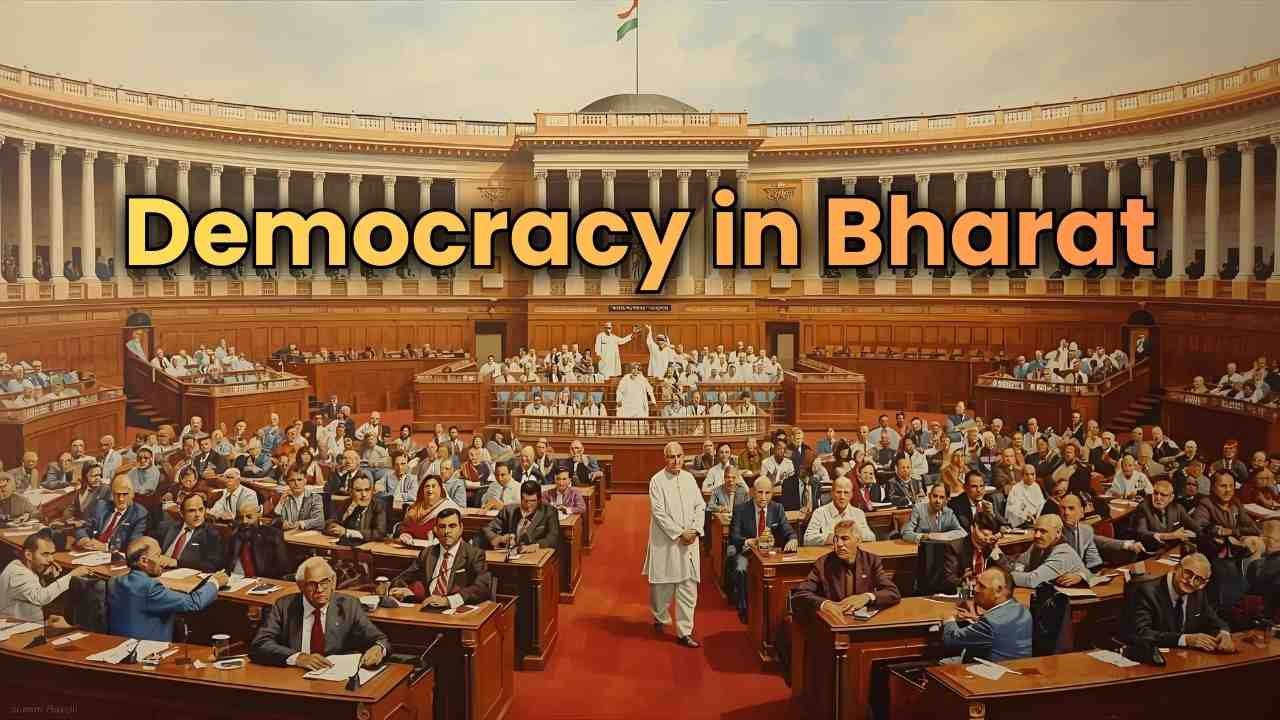
SECTION 1 — What is “Vote Chori”? Amit Shah’s 3-Dimensional Framework
In the debate, Amit Shah outlined three different types of vote chori:
1. Fake or Ineligible Voters Participating in Elections
If a person who is not eligible to vote manages to enter the electoral rolls — this is considered a distortion of voter legitimacy.
2. Winning Elections Through Unfair Means
If a candidate wins through manipulation, misuse of state machinery, or violation of election rules — the victory itself becomes illegitimate.
3. Defying the Public Mandate After Results
If someone acquires a position of power against the actual democratic mandate — this too is a form of “vote chori.”
This framework sets the stage for analyzing three major episodes from Indian political history.
SECTION 2 — Incident #1: 1946–47 Congress Presidential Vote & the Nehru–Patel Question
Amit Shah and several historians often refer to the Congress President election of 1946, which indirectly decided who would become India’s first Prime Minister.
Historical Background
Before Independence, the Congress President was typically the person nominated to head the interim government. In 1946:
12 Provincial Congress Committees voted for their preferred candidate.
11 committees reportedly voted for Sardar Vallabhbhai Patel.
0 committees officially voted for Jawaharlal Nehru.
Yet, Gandhi personally intervened and asked Patel to withdraw. Nehru became Congress President and thus Prime Minister.
Why Amit Shah calls this “Vote Chori”
According to his interpretation:
The majority of delegates supported Patel.
Gandhi’s influence overrode the democratic vote.
The final outcome did not reflect the “popular mandate” within Congress.
Historical Debate
Historians remain divided:
Some argue Gandhi acted to maintain unity and believed Nehru could better represent India internationally.
Others say it set an early precedent where internal democracy was sacrificed for leadership preference.
Democratic Impact
This incident is often revisited for one reason:
➡️ It shaped the entire direction of post-Independence India.
SECTION 3 — Incident #2: 1975 — Indira Gandhi’s Disqualification & the Emergency
This is one of the most documented cases of electoral invalidation in global political history.
What Actually Happened?
Raj Narain challenged Indira Gandhi’s 1971 Lok Sabha victory from Rae Bareli, accusing her of:
Misusing government machinery
Violating campaign norms
Engaging state officials in election work
In June 1975, the Allahabad High Court found her guilty and:
Cancelled her parliamentary membership
Barred her from contesting for six years
A Democratic Earthquake
Instead of resigning, Indira Gandhi:
Declared a national Emergency
Amended laws to protect her position
Restricted press, arrested opposition leaders
Centralised power in unprecedented ways
Why Shah calls this “Vote Chori”
Because:
A court established wrongdoing.
Instead of accepting democratic consequences, laws were modified to retain power.
Long-Term Impact
India witnessed suspension of civil liberties, media censorship, and political arrests.
This led to the Janata Party wave of 1977.
The event remains a permanent lesson in India’s institutional memory.
SECTION 4 — Incident #3: Sonia Gandhi’s Citizenship & Voter Eligibility Dispute
This incident is more technical and legal than the first two.
What happened?
A case was filed in a Delhi civil court questioning:
Whether Sonia Gandhi was a registered voter before she became an Indian citizen.
Whether her electoral participation violated eligibility norms.
Amit Shah cites this as an example of:
➡️ A non-citizen allegedly being on the voter rolls
➡️ A direct breach of electoral eligibility
Key Legal Clarification
Sonia Gandhi became an Indian citizen in 1983.
Questions have been repeatedly raised in political contexts, but courts have not given any adverse ruling on her eligibility.
Why this episode appears in the debate
Because it represents a symbolic instance of the first category of “vote chori”:
ineligible voters appearing on electoral lists.
Even if the allegation remains legally unresolved, it serves as a political talking point in debates about voter legitimacy.
SECTION 5 — The Modern Context: Rahul Gandhi vs Amit Shah Parliament Clash
The recent debate was triggered when Rahul Gandhi challenged Amit Shah to:
Respond directly to his press conferences
Debate specific allegations about voter rolls
Address concerns about electoral reforms
Amit Shah responded sharply:
Asserting parliamentary procedure
Rejecting the idea that Rahul could dictate debate order
Presenting historical cases of “vote chori”
This confrontation symbolizes a recurring theme in Indian politics:
➡️ History is used as a weapon in modern political battles.
SECTION 6 — Why These Three Incidents Remain Politically Powerful
Each incident represents a deep, unresolved question:
1. Leadership Legitimacy (1946–47)
Who decides national leadership — party workers or a central moral authority?
2. Constitutional Integrity (1975 Emergency)
Can personal political survival override democratic norms?
3. Electoral Purity (Sonia Gandhi case)
How reliable and transparent are voter lists?
These incidents allow political leaders to:
Reinforce ideological narratives
Draw contrasts between past and present governments
Shape generational memory and political identity
SECTION 7 — Analytical Take: Is “Vote Chori” an Accurate Term for These Events?
The term is more political than legal.
In the 1946 episode:
No constitutional violation, but moral questions remain.
In 1975:
A legal conviction followed by political suppression.
Most scholars view this as the darkest chapter in Indian democracy.
Sonia Gandhi case:
Allegations remain unsupported by legal findings.
This is more a political narrative tool than a proven fact.
Thus, “vote chori” in these contexts reflects:
Historical reinterpretation
Political symbolism
Generational storytelling
Lessons about leadership and institutional integrity
SECTION 8 — Conclusion: What Today’s Citizens Should Learn
Whether one agrees with Amit Shah’s interpretations or Rahul Gandhi’s counterpoints is a matter of political viewpoint. But the larger lessons remain universal:
Democracy requires transparency, not selective memory.
Institutions must be protected from political pressure.
History must be studied beyond political speeches.
Citizens must stay aware of how narratives shape opinions.
India’s democratic journey is complex, filled with triumphs and tensions.
The debate on “vote chori” is not just about past leaders —
it is about ensuring that future generations inherit a clean, transparent, and trusted electoral system.