Section 1: The Hidden Side of the “Mahatma”
When we think about Mahatma Gandhi, the first image that comes to mind is of a frail man, dressed in simple khadi, leading millions of Indians with the power of non-violence. For most of us, Gandhi is not just a historical leader but a symbol of purity, simplicity, and sacrifice. His image has been polished over the decades through school textbooks, speeches, and movies. Children in India grow up hearing him called “Bapu” – the Father of the Nation. His message of truth and non-violence is repeated endlessly, almost like a mantra.
But here is the shocking part: very few people know about the darker side of Gandhi’s life, a chapter that was deliberately hidden, downplayed, or even erased from history. Between 1946 and 1947, when Gandhi was already 77 years old, he began something that he called “celibacy experiments.” What he did in the name of spiritual discipline is disturbing, controversial, and for many, unforgivable.
Gandhi did not simply preach celibacy (brahmacharya). He tested it in the most extreme way possible—by asking very young women, some as young as 17 or 18, to sleep beside him, unclothed, in the same bed. He described it as a test of purity and self-control. His followers and associates called it something else: deeply troubling and disturbing.
Imagine the contradiction: the same Gandhi who preached about women’s dignity, who said women were morally stronger than men, was also the one putting these young women in situations where they felt unsafe, pressured, and unwilling. Many of them did not want to participate, but Gandhi’s influence was so strong, and their dependence on him so complete, that they could not refuse.
Even Gandhi himself admitted in his letters that the women did it “reluctantly,” only because he asked them to. Think about this for a moment—if someone as powerful as Gandhi told you that your purity, your spirituality, or even your loyalty depended on following his command, could you have said no? For these women, there was no choice.
The shocking detail is that these experiments did not involve strangers. The women included Gandhi’s grandnieces, close relatives, and trusted associates. Manu Gandhi, barely 18, was one of them. Abba Gandhi, only 17, was another. His personal physician, Dr. Sushila Nair, also participated. Others included wives of Gandhi’s associates who reluctantly gave in once or twice. This was not an isolated incident. It went on night after night, over months, while Gandhi himself claimed it was a path of discipline, a sacrifice for purity, and even connected it to the freedom of India.
For the people around him, it was disturbing. For Gandhi, it was an “experiment with truth.”
This is where the discomfort begins. Because we are taught to see Gandhi as a saint, the “Mahatma.” And yet, when we uncover this hidden side, the questions become louder: Was it appropriate? Was it right? Can we continue to glorify him without acknowledging this?
The truth is not simple. Gandhi’s contributions to India’s freedom struggle cannot be denied. But history is never black and white. Just as Gandhi inspired millions, he also left scars on those closest to him. The celibacy experiments stand as one of the most controversial and disturbing aspects of his life, one that forces us to re-examine the “Mahatma” we were taught to worship.
Section 2: The Women Behind the Silence
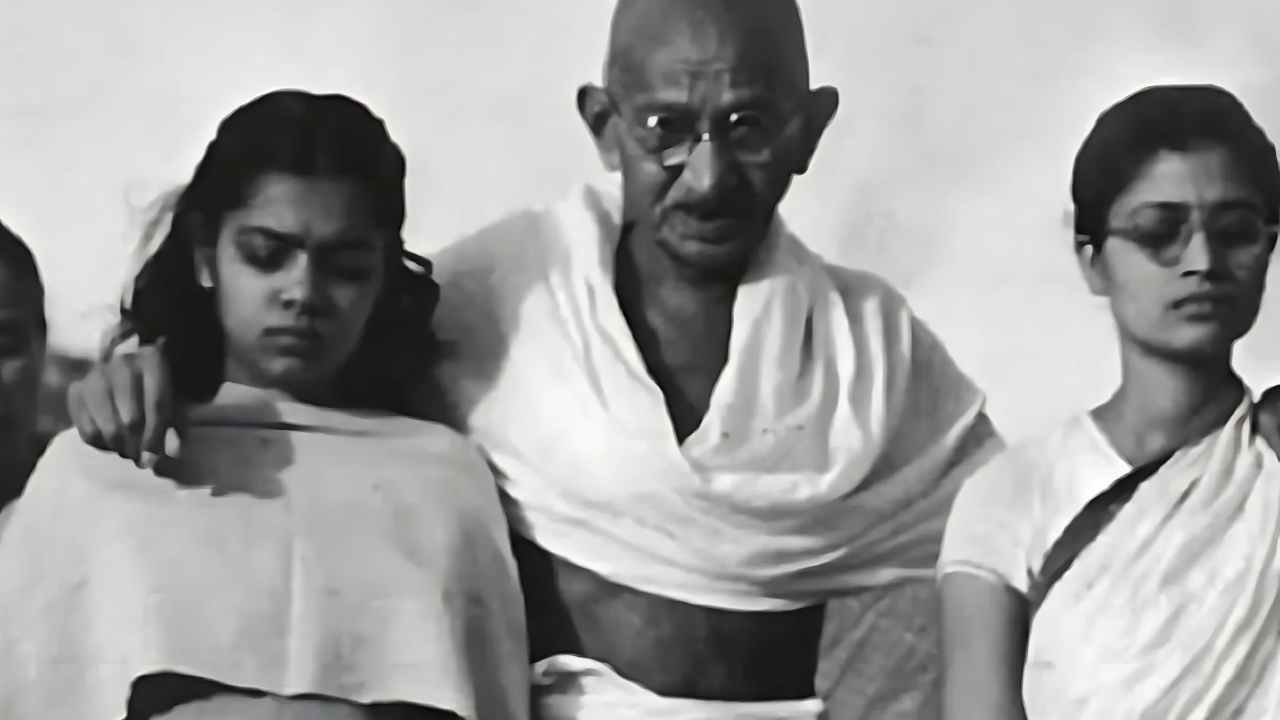
When we peel back the polished layers of history, we find that Gandhi’s so-called experiments were not some abstract idea practiced alone. They directly involved living, breathing women—each with her own story, her own vulnerabilities, and her own silent struggles. Most of these women were deeply connected to Gandhi, either through family, loyalty, or dependence. And almost all of them were too powerless to refuse.
Manu Gandhi: The Grandniece Who Could Not Say No
Perhaps the most heartbreaking name on this list is Manu Gandhi, his grandniece. She was barely 18 years old when Gandhi began his celibacy experiments with her. Manu had lost her mother at a young age and came to live with Gandhi when she was just 15. With no family to turn to, no money of her own, and no other home, Gandhi was everything to her—a guardian, a guide, even a father figure.
In her diary, Manu wrote that she saw Gandhi as a motherly presence. She insisted that she felt “innocent and undisturbed” while sleeping beside him. But let us pause for a moment: what kind of mother asks her child to undress and share a bed to test purity? The contradiction is painful.
After Gandhi’s death, Manu’s life was marked by loneliness and sorrow. She never married, never had children, and lived alone in her village for over 20 years. She eventually died young, at the age of 44, from tuberculosis. Many historians believe her stress, isolation, and dependence on Gandhi’s memory contributed to her early death.
Abba Gandhi: Bound by Fear and Loyalty
Another participant was Abba Gandhi, even younger than Manu. At just 17 or 18 years old, she was married to Gandhi’s grandnephew Kanu. Despite being newly married, Gandhi convinced her to join the experiments. In his own writings, Gandhi admitted that Abba undressed “reluctantly,” and only did so out of fear of hurting him emotionally.
Think about how heavy that pressure must have felt: a teenage girl, married, yet asked by her husband’s grandfather-like figure—who was also the nation’s most powerful moral leader—to strip in his presence. Even her husband, Kanu, felt uneasy, but could he question Gandhi? Of course not. Gandhi’s influence was far too great.
For the rest of their lives, Abba and Kanu dedicated themselves to preserving Gandhi’s memory, working as photographers and caretakers of his legacy. But their personal lives were sacrificed at the altar of Gandhi’s shadow.
Dr. Sushila Nair: A Life Entirely Devoted
Then there was Dr. Sushila Nair, Gandhi’s personal physician. She was in her early 30s when the more controversial experiments began, but she had already been a part of Gandhi’s practices earlier—sharing baths, massages, and intimate “tests of self-control.” She never married and never built a life outside of Gandhi’s orbit.
After his death, she continued serving his mission, eventually becoming India’s Health Minister and founding institutions in his name. But even with all these achievements, her personal identity never separated from Gandhi’s. Her loyalty consumed her life.
Other Women: Reluctant and Torn
There were also others:
Prabhavati Narayan, wife of socialist leader Jayaprakash Narayan, reluctantly joined.
Kanchan Shah, wife of Gandhi’s ashram manager, agreed once, for just one night.
Beena Patel, relative of Gandhi’s extended family, was drawn in through obligation.
Each of them did it not out of choice, but out of loyalty, dependency, or fear of dishonoring the Mahatma.
The Psychological Impact
Gandhi’s secretary, Nirmal Kumar Bose, who carefully noted these events in his diary, later wrote that these women ended up trapped in what modern psychology calls trauma bonding. They were emotionally attached to the very person who caused them pain and confusion. They competed for Gandhi’s approval, became jealous of each other, and lost their individual voices.
What makes it even sadder is that none of these women ever openly criticized Gandhi. They defended him until the end, because their entire existence—social status, financial support, and identity—was tied to him. To break away would have meant losing everything.
This section shows us clearly: these were not nameless followers. They were young girls and women whose lives were reshaped, even scarred, by Gandhi’s obsession with testing celibacy. They carried the weight silently, while the world saw only the saintly image of the Mahatma.
Section 3: Gandhi’s Justification — The “Experiment with Truth”
When critics hear about Gandhi’s celibacy experiments, the first question that comes to mind is: Why? Why would a 77-year-old man, revered as a saint and followed by millions, put himself and young women through such disturbing practices?
Gandhi himself had clear answers. To him, these were not shameful or secret acts. They were spiritual tests, deeply connected to his philosophy of truth and self-control.
The Vow of Brahmacharya
The story begins back in 1906. At the age of 37, after 24 years of marriage and four children with Kasturba, Gandhi suddenly took a vow of brahmacharya—strict celibacy. For him, celibacy was not just about avoiding sex; it was about controlling every desire, every thought, every urge of the body.
He wrote: “Without brahmacharya, the satyagrahi will have no lustre, no inner strength to stand unarmed against the whole world.”
In other words, Gandhi believed that his ability to lead India’s freedom struggle depended on his personal purity. If he could conquer desire, he could conquer anything.
Extending Control to Others
But Gandhi did not stop at practicing celibacy himself. In his ashrams, he imposed rules on everyone:
Married couples were told not to sleep together.
Cold baths were encouraged to suppress desire.
Any hint of sexual expression was discouraged.
To him, celibacy was not just personal discipline; it was a collective lifestyle. But many questioned: why interfere in other people’s marriages? Why impose your vow on others?
From Personal to Public “Experiments”
By the 1940s, Gandhi took this further. He began describing celibacy not just as a vow but as an experiment with truth. Just as he experimented with non-violence in politics, he claimed he was experimenting with purity in personal life.
He openly declared that sleeping naked with young women was a way to test whether he had truly conquered sexual desire. If he could remain pure in such close proximity, it would prove his discipline.
But Gandhi did not stop at testing himself. He argued that these experiments were also a test for the women. Could they too remain pure, without feeling desire? If yes, they would be spiritually stronger.
Three Reasons Gandhi Gave
Spiritual Purification – Gandhi wanted to be so pure that God would completely control him. For him, purity meant power.
Testing Self and Others – He believed both he and the women could prove their purity by resisting desire in intimate situations.
Saving India – Most shocking of all, Gandhi linked his personal purity with India’s destiny. He believed that if he achieved perfect celibacy, the power of non-violence would become stronger and help India heal from communal riots and violence.
In his mind, these were not immoral acts. They were sacrifices, like fasting or meditation, meant to inspire the nation.
The Problem of Power
Here lies the real problem. Gandhi was not just an ordinary man; he was the most influential leader of his time. The women who participated were not equals—they were dependent on him for shelter, food, and identity. So, could they really say no?
Critics like Sardar Patel, Jawaharlal Nehru, and Vinoba Bhave openly called it wrong, unnatural, and harmful. Gandhi’s own associates begged him to stop. But Gandhi remained firm. He said that if he gave up the practice just because others were uncomfortable, it would mean he was guilty. And Gandhi was never willing to see himself as guilty.
The Open Secret
What makes this story even more surprising is that Gandhi never tried to hide it. He wrote about his celibacy experiments openly, in letters and diaries. He even compared them to yagna (sacred sacrifice) and urged others to see them as an example of self-control.
For him, this was part of his lifelong “experiment with truth.” For others, it was abuse of power, dressed up in spiritual words.
This section reveals a painful contradiction: Gandhi, the man who fought for India’s freedom with truth and non-violence, used the same words—truth, purity, sacrifice—to justify actions that caused silent suffering to the women around him.
Section 4: The Silent Suffering of the Women
Behind the lofty words of “truth,” “purity,” and “sacrifice” lay the very real lives of women who paid the price for Gandhi’s experiments. These were not nameless devotees. They were daughters, wives, nieces, and professionals whose futures were quietly stolen.
Manu Gandhi — A Youth Lost in Shadows
Manu Gandhi, barely 18 when she became the center of Gandhi’s celibacy tests, carried the heaviest burden. She was dependent on him completely after her mother’s death. Gandhi claimed she was like a daughter to him, even calling her “innocent” and “pure.” Yet, night after night, he asked her to sleep naked beside him to prove that both of them were spiritually disciplined.
Her diary tried to normalize it, saying she saw Gandhi as a mother figure. But deep inside, she had no choice. Refusal would mean betrayal of the only family she had left.
After Gandhi’s assassination, Manu drifted into a lonely life. She never married, never built a family, and lived isolated in her village. At only 44, she died of tuberculosis—worn out by stress, solitude, and decades of unspoken trauma.
Abba Gandhi — Trapped in Loyalty
Abba Gandhi’s story is equally heartbreaking. Married young to Kanu Gandhi, she was asked by her husband’s grandfather-like figure—the most powerful man in India—to participate. Gandhi admitted in his letters that she undressed “reluctantly” and only obeyed because she feared hurting him emotionally.
Imagine the moral trap: a teenage girl, newly married, having to strip not out of her will but out of fear of offending the Mahatma. Even her husband, Kanu, felt upset, but he dared not challenge Gandhi. The price of disobedience was too high.
Abba and Kanu spent the rest of their lives as photographers, documenting Gandhi’s memory, but their personal desires and ambitions remained buried.
Dr. Sushila Nair — Devotion Without a Personal Life
Dr. Sushila Nair, a woman of education and skill, became Gandhi’s physician and close companion. She joined him in his strange baths and massages from her twenties, and later in the celibacy experiments. She never married, never had children, and poured her entire existence into serving Gandhi’s cause.
After his death, she rose to positions of power—becoming India’s Health Minister and building institutions in Gandhi’s name. Outwardly, she looked successful. But inwardly, her identity was never separate from Gandhi. She lived and died as an extension of his shadow.
The Others — Sacrifice Over Choice
Prabhavati Narayan, married to Jayaprakash Narayan, gave in out of loyalty but carried private pain.
Kanchan Shah, wife of Gandhi’s ashram manager, joined once, reluctantly, for a single night.
Beena Patel, related to Gandhi’s extended family, became part of the list out of obligation.
Each of these women silenced their own voice, their own needs, for Gandhi’s command.
Psychological Damage and “Trauma Bonding”
Nirmal Kumar Bose, Gandhi’s secretary, who observed and recorded much of this, later described how these women fell into unstable triangles—jealous of one another, competing for Gandhi’s attention, emotionally dependent on the same man who confused and hurt them.
Modern psychologists call this trauma bonding: when a person becomes attached to the one who causes them pain, because their survival and identity depend on them. These women lived in that trap.
Why Did None of Them Speak Out?
The saddest truth is this: none of the women ever publicly accused Gandhi. Instead, they defended him till the very end. Why? Because their lives—socially, financially, emotionally—were bound to him. Society too was not on their side. When whispers of these experiments leaked, people rushed to protect Gandhi’s reputation instead of asking if the women were okay.
As always, blame fell on the women, while the man’s image remained sacred.
This section shows us the human cost of Gandhi’s choices. Behind the polished image of the Mahatma were real women who lost their futures, identities, and peace of mind. They became symbols of sacrifice in a story that was never theirs to choose.
Section 5: Erased From History, But Not From Truth
When Gandhi’s celibacy experiments became known to his close circle, many were horrified. His most trusted allies, men who had stood shoulder to shoulder with him in India’s freedom struggle, openly opposed what he was doing.
Shock Among Leaders
Sardar Vallabhbhai Patel wrote directly to Gandhi, calling it a “terrible blunder” and a practice against religion (heterodoxy).
Jawaharlal Nehru, whom Gandhi loved like a son, described Gandhi’s obsession with celibacy as “abnormal and unnatural.”
Vinoba Bhave, one of Gandhi’s closest disciples, resigned from his newspaper in protest.
Even Gandhi’s stenographer, the man who noted his daily words, quit his job because he found the situation unbearable.
And yet, Gandhi did not stop. He was convinced that he was right, and that these experiments were essential for his spiritual path and even for India’s freedom.
The Cover-Up After His Death
After Gandhi was assassinated in January 1948, a systematic effort began to erase this part of his life.
Biographers skipped or softened the details.
School textbooks presented a sanitized version of Gandhi’s life.
Government institutions avoided the topic altogether.
Even those who had personally witnessed these events, like Nirmal Kumar Bose, admitted that after Gandhi’s death, everyone wanted to suppress further discussion. They feared it would damage his legacy and weaken the moral foundation of the freedom struggle.
As a result, generations of Indians grew up with only the saintly image of Gandhi, never knowing that the “Mahatma” had carried out such controversial and disturbing practices.
The Complexity of Legacy
Does acknowledging this erase Gandhi’s contribution to India’s freedom? No. His leadership in mobilizing millions, his philosophy of non-violence, and his ability to unite a colonized nation remain unparalleled. But to blindly worship him as flawless is dangerous.
Indian culture has always allowed questioning—even of gods. We question Lord Rama for sending Sita to exile. We analyze Krishna’s choices in the Mahabharata. If we can question divine figures, why should Gandhi be beyond scrutiny?
True respect for history means seeing our heroes as full human beings—great in many ways, but flawed in others. Gandhi was not a god. He was a man—capable of extraordinary leadership, but also of disturbing mistakes.
Facing the Truth Today
For many, learning about this side of Gandhi feels like betrayal. At first, even researchers and writers dismissed it as rumor. But Gandhi himself never hid it—he wrote openly about it, convinced that it was right.
The truth is uncomfortable. But it teaches us an important lesson: never over-glorify leaders. Admire their contributions, but don’t close your eyes to their flaws. History is not black and white. Every human being has a grey side.
Final Thought
We grew up hearing about Gandhi as the “Mahatma.” But history demands that we see the whole man—not just the saintly image, but also the disturbing truths. Knowing this does not erase his role in India’s freedom, but it does remind us that blind worship is never healthy.
At the end of the day, Gandhi was not above questioning. And perhaps, the greatest tribute to truth—the very value he preached—is to face his life honestly, without hiding the parts that make us uncomfortable.