Farting is one of the most common — and natural — bodily functions. Almost everyone does it every single day, yet it remains a topic surrounded by embarrassment, jokes, and curiosity. One question many people ask (sometimes out loud, sometimes quietly to themselves) is:
“Why do farts smell?”
Some farts are barely noticeable, while others can clear a room in seconds. Some smell like rotten eggs, others like spoiled vegetables or even rotten tomatoes. But why? The truth lies in biology, diet, and chemistry.
In this guide, we will explore:
The science behind fart smells
What makes some farts stink more than others
Why certain farts smell like eggs or rotten tomatoes
How diet, gut bacteria, and health conditions influence odor
Myths vs. facts about smelly farts
How to manage or reduce strong odors without harming digestion
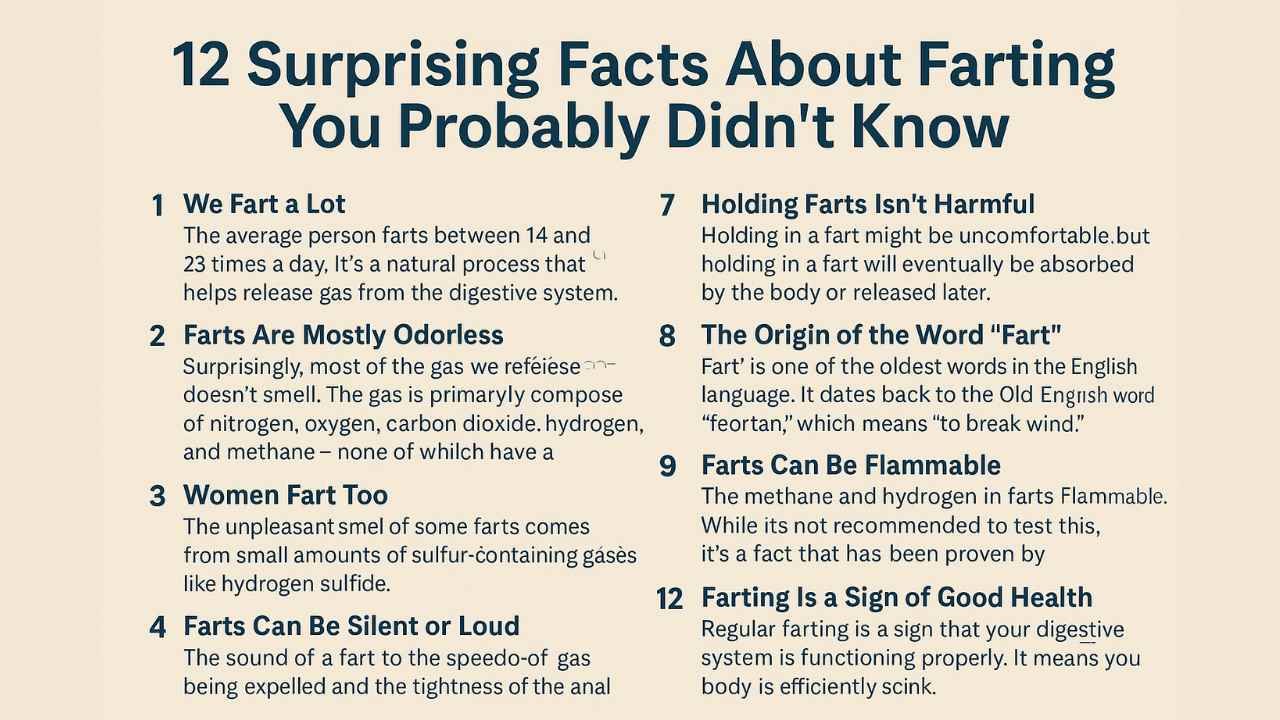
1. Understanding Flatulence: A Quick Overview
Before we dive into why farts smell, it’s important to understand what a fart actually is.
A fart (scientific term: flatus) is simply gas that’s released from the digestive tract through the rectum. This gas is a mix of:
Nitrogen (20–90%)
Oxygen (small amounts)
Carbon dioxide
Hydrogen
Methane
Most of these gases are odorless. The smell comes from trace gases, especially those containing sulfur.
2. Why Do Some Farts Smell More Than Others?
The main reason some farts stink is sulfur compounds. These are gases produced when bacteria in your intestines break down food. Common sulfur-containing gases include:
Hydrogen sulfide — smells like rotten eggs
Methanethiol — smells like decaying vegetables or cabbage
Dimethyl sulfide — has a sweet yet unpleasant sulfur smell
The amount of these gases depends on:
What you eat
Your gut bacteria balance
How long food stays in your intestines
3. Why Do Farts Smell Like Rotten Eggs?
If your farts smell like rotten eggs, the most likely cause is hydrogen sulfide gas. This is a natural byproduct when your gut bacteria break down sulfur-rich foods such as:
Eggs
Meat (especially red meat)
Fish
Garlic and onions
Cruciferous vegetables (broccoli, cauliflower, cabbage, Brussels sprouts)
Fun fact: Hydrogen sulfide in small amounts is harmless, but in high concentrations (like in industrial settings) it’s toxic.
4. Why Do Farts Smell Like Rotten Tomatoes?
This odor is less common but still happens. A “rotten tomato” smell often comes from volatile organic acids produced during digestion, especially when certain plant-based foods ferment in the gut.
Possible causes:
Tomato-based foods (tomato sauce, ketchup, soups) fermenting in your gut
Lycopene-rich foods breaking down and mixing with sulfur gases
Gut bacteria imbalance causing unusual fermentation patterns
Sometimes, a rotten tomato smell can indicate that your stomach is struggling to digest certain plant sugars, leading to more pungent acids.
5. Diet: The Biggest Factor Behind Smelly Farts
Your diet plays the largest role in determining fart odor.
High-sulfur foods (strong smells)
Eggs
Red meat
Fish
Garlic
Onions
Cabbage family vegetables
High-fiber foods (more gas, varied smells)
Beans
Lentils
Whole grains
Asparagus
Broccoli
Dairy products (if lactose intolerant)
Milk
Cheese
Ice cream
When lactose isn’t digested properly, bacteria ferment it — producing gas that smells sour or rotten.
6. Gut Bacteria and Fart Smell
Your microbiome — the collection of bacteria in your gut — plays a key role in digestion and gas production.
Balanced microbiome → gas is produced but smells mild.
Imbalanced microbiome (due to antibiotics, poor diet, or illness) → unusual and stronger odors.
Certain bacteria specialize in breaking down sulfur-rich compounds, which can lead to stinkier farts.
7. Health Conditions That Cause Strong Odors
While most smelly farts are harmless, sometimes persistent, foul-smelling gas can be linked to health issues:
Lactose intolerance → undigested lactose ferments in the gut
Celiac disease → gluten damages the small intestine
IBS (Irritable Bowel Syndrome) → irregular digestion and gas release
Small Intestinal Bacterial Overgrowth (SIBO) → excessive fermentation in the small intestine
Malabsorption syndromes → nutrients not absorbed, more fermentation occurs
If smelly farts are accompanied by weight loss, diarrhea, or stomach pain, see a doctor.
8. Why Do Morning Farts Smell Worse?
Morning farts often have a stronger smell because:
Food has been fermenting overnight
The body has been inactive, letting gas build up
Overnight fasting changes gut bacteria activity, sometimes producing more sulfur gases
9. Myths About Smelly Farts
Myth 1: Only unhealthy people have smelly farts.
Fact: Even healthy diets (high in vegetables) can produce smelly gas due to natural sulfur content.
Myth 2: Women’s farts smell less.
Fact: Studies show women’s farts can contain more hydrogen sulfide than men’s on average.
Myth 3: You can stop farting completely.
Fact: Farting is part of healthy digestion. You can reduce odor, but you shouldn’t aim to stop gas production entirely.
10. How to Reduce the Smell Without Stopping Farting
If your goal is to keep digestion healthy but reduce strong odors, try:
Limit high-sulfur foods (but don’t cut them out completely — they’re nutritious).
Stay hydrated — water helps dilute smelly compounds.
Chew food slowly — reduces swallowed air and aids digestion.
Take probiotics — support a healthy microbiome.
Avoid artificial sweeteners like sorbitol — they ferment easily and produce bad-smelling gas.
Exercise regularly — keeps digestion moving, reducing fermentation time.
11. Fun Facts About Fart Smells
The human nose can detect hydrogen sulfide in parts per billion — meaning even a tiny amount smells strong.
Some scientists study flatulence to understand gut health and diet impacts.
In medieval times, some physicians believed smelling farts could prevent disease — obviously not true!
12. When to See a Doctor About Smelly Farts
Most of the time, fart odor is harmless and diet-related. But you should see a healthcare professional if:
Odor is extremely foul and persistent
Farting is accompanied by pain, bloating, diarrhea, or constipation
You notice blood in stool or unexplained weight loss
Conclusion
Farting is a natural process — and yes, sometimes it smells. The odor comes mainly from sulfur compounds created when gut bacteria digest certain foods. The smell can vary from mild to strong, sometimes resembling rotten eggs or even rotten tomatoes, depending on diet, gut health, and other factors.
Instead of feeling embarrassed, see it as a sign your body’s digestive system is doing its job. And if the smell is bothersome, a few dietary tweaks can make a big difference.