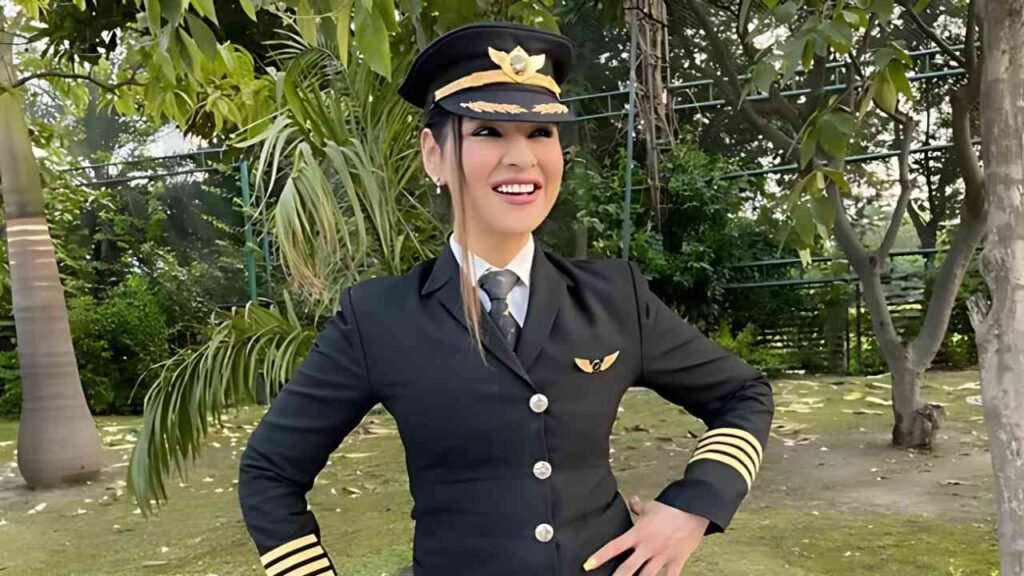
Aviation has long been considered a male-dominated industry. However, pioneers like Captain Zoya Agarwal have shattered glass ceilings and rewritten the narrative. From dreaming of touching the stars as a little girl in Delhi to commanding some of the longest commercial flights in the world, Captain Zoya’s journey is a story of resilience, determination, and unparalleled excellence.
✈️ The Making of a Trailblazer
Captain Zoya Agarwal, a proud Delhiite, hails from a traditional and conservative background where women were not often encouraged to pursue unconventional careers. However, from a young age, she was captivated by the idea of flying. Sitting on her rooftop as a child, gazing at the stars, she dreamt of piloting aircraft that could take her closer to them.
Her academic journey took her to Queen Mary’s School in North Delhi and later to St. Stephen’s College, where she excelled in science, particularly physics and mathematics—an essential foundation for aviation.
Despite facing societal resistance and financial challenges, Zoya remained steadfast in her ambition. She worked tirelessly, improving her English, studying aviation rigorously, and eventually training as a pilot.
👩✈️ Journey to the Skies
Captain Zoya’s career took flight when she joined Air India. Over the years, she became a seasoned pilot, flying multiple aircraft models, including Airbus and Boeing. Today, she is a commander on the Boeing 777, one of the most sophisticated and long-haul aircraft in the world.
Her technical knowledge and precision in flying have made her a role model for aspiring aviators.
🏆 Historic Achievements
- World’s Longest All-Female Flight: In 2021, Captain Zoya led an all-women pilot team on Air India’s historic San Francisco to Bengaluru flight, covering 16,000 km in 18 hours, setting a world record.
- COVID-19 Humanitarian Flights: During the pandemic, she operated 64 international repatriation flights, helping stranded Indians return home.
- UN Spokesperson for Gender Equality: Recognized by the United Nations, she became a spokesperson for their ‘Generation Equality’ initiative, advocating for women’s empowerment.
🔥 The Realities of Being a Pilot
While being a pilot might seem glamorous from the outside, it is a job that demands discipline, precision, and extreme responsibility. Pilots are trained to handle critical situations, make split-second decisions, and ensure the safety of hundreds of passengers at a time.
⏳ Managing Long-Haul Flights
Aviation regulations do not permit a single pilot to operate continuously for 18 hours. Instead, long-haul flights have four pilots—two captains and two first officers—who take turns resting in specially designed pilot rest cabins. Safety remains the top priority.
⚡ Navigating Emergency Situations
During a flight from Chicago to Delhi in 2019, Captain Zoya encountered an unprecedented challenge. Due to political tensions, Pakistan’s airspace was suddenly closed, forcing her to reroute mid-air. Airports in Dubai, Sharjah, and Abu Dhabi were all full, leaving them with no immediate landing options. Demonstrating exceptional leadership, she diverted the flight to Dubai’s new airport, refueled, and safely reached Delhi.
🛫 The Science Behind Aviation
Flying an aircraft isn’t just about controlling buttons; it’s about mathematics, physics, and decision-making. Modern cockpits are equipped with state-of-the-art navigation systems, flight radars, and automated controls, but pilots are trained to manually operate aircraft in case of emergencies.
👩🚀 Challenges of Women in Aviation
While there has been significant progress, the aviation industry still has barriers for women. Until 2019, several major international airlines did not hire female pilots due to outdated concerns about maternity leave and training costs. Captain Zoya has been vocal about the need for equal opportunities and continues to inspire young girls to break stereotypes.
🚀 Future of Aviation & Technology
With advancements in artificial intelligence (AI) and autopilot systems, many speculate whether machines will replace human pilots. However, Captain Zoya emphasizes that aviation requires human intuition, adaptability, and decision-making skills, which AI cannot replicate. While technology can assist, pilots will remain indispensable to ensuring safe air travel.
✨ Words of Wisdom from Captain Zoya
For those aspiring to become pilots or chase unconventional dreams, Captain Zoya’s advice is simple:
- Believe in yourself: If you have a dream, pursue it relentlessly.
- Embrace challenges: Every obstacle is an opportunity to grow.
- Continuous learning: Keep upgrading your skills and knowledge.
- Break stereotypes: Do not let societal expectations define your career.
- Stay disciplined: Success in aviation (and life) requires immense dedication.
🌟 Conclusion
Captain Zoya Agarwal’s journey from a young girl with a dream to an internationally recognized aviation leader is nothing short of inspirational. She has not only redefined success but has also paved the way for countless aspiring female pilots.
Her story reminds us that the sky is not the limit—it’s just the beginning.
What are your thoughts on Captain Zoya’s journey? Share in the comments!
(00:01) Hello, ladies and gentlemen! This is your captain speaking. My name is Zoya Agarwal, and I welcome you aboard the Lallantop Flight. [Music] [Applause] [Music] [Applause] Thank you!
Interviewer: What aircraft do you fly?
Captain Zoya: I fly the Boeing 777.
Interviewer: How much does it cost these days?
Captain Zoya: The price point is around $375 million.
Interviewer: That translates to about ₹3,750 crore. Wow! Have people ever asked you about the fuel efficiency of the plane?
Captain Zoya: Many times! You see, in movies, they often show pilots saying, “Oh no, we’re running low on fuel!” But in reality, regulations require us to always carry enough fuel to divert to an alternate airport in case of bad weather or other unforeseen issues.
(00:47)
Interviewer: Do pilots take naps on such long-haul flights?
Captain Zoya: A flight of 18 hours is not humanly possible to fly without breaks. Regulations allow us rest periods. For instance, once when I was flying from Chicago to Delhi, Pakistan’s airspace suddenly shut down, completely blocking our route. Situations like these are beyond our control.
Interviewer: But pilots have a certain aura about them, right? Like, when you enter the airport, do people part ways for you?
Captain Zoya: Haha! Not quite. It may look glamorous from the outside, but our job is primarily about responsibility and discipline.
Interviewer: What do you carry in that small black pilot bag? Just clothes?
Captain Zoya: Not at all! In fact, I hardly carry clothes in it. The bag contains essential items like a flashlight (for night inspections), extra glasses for those who need them, our licenses, and safety checklists. Safety is paramount for us.
(02:04)
Interviewer: Airlines sometimes cut costs on passenger comfort—like reducing legroom. Recently, a minister, Shivraj Singh Chouhan, tweeted that his seat broke mid-flight!
Captain Zoya: I would refrain from commenting on political matters. However, airlines always strive to maintain safety and comfort, but minor inconveniences can happen.
Interviewer: Why do so many airlines run at a loss? Vijay Mallya’s airline shut down, Jet Airways collapsed, and several others struggle.
Captain Zoya: Operating margins in aviation are extremely thin. Costs are high, and pricing competition is fierce. Fuel prices fluctuate, making profitability challenging.
Interviewer: But ticket prices are sometimes exorbitant, especially during peak seasons.
Captain Zoya: Well, surge pricing exists across industries. Think of Uber or Zomato—they also adjust prices based on demand.
(03:10)
Interviewer: Female cabin crew have been common, but female pilots weren’t as widely accepted. Did you face gender bias during training?
Captain Zoya: Absolutely. Many high-ranking officials told me that airlines hesitate to hire female pilots because of maternity leaves and retraining costs. Even in 2019, some major international airlines did not accept female pilots.
(04:04)
Interviewer: Let’s talk about your historic flight—San Francisco to Bengaluru, spanning 16,000 km in over 18 hours.
Captain Zoya: Yes, that was a record-breaking flight. On such long-haul journeys, there are always two sets of pilots—two captains and two first officers—to ensure seamless operations.
Interviewer: Any emergency situations you’ve faced?
Captain Zoya: Once, while flying from Chicago to Delhi, Pakistan’s airspace suddenly closed due to political tensions. We had to divert to Dubai, but all major airports—Dubai, Sharjah, Abu Dhabi—were at full capacity. Finally, we were allowed to land at a newly built airport. We refueled and rerouted over the Arabian Sea to reach Delhi safely.
(06:03)
Interviewer: How did your journey as a pilot begin? Where are you from?
Captain Zoya: I am from North Delhi, from a very conservative family. I was the only child, both the son and daughter of the family. When I was eight years old, I dreamt of touching the stars. Watching them twinkle from my terrace, I wished to fly.
Interviewer: First time you ever flew as a passenger?
Captain Zoya: When I went for my pilot training!
(08:12)
Interviewer: Flight training is expensive. How did you afford it?
Captain Zoya: I came from modest means. Pilot training costs around ₹50 lakh, but I managed through education loans. India’s aviation industry is growing rapidly, and aspiring pilots should consider financial options available.
Interviewer: Did your family support your decision?
Captain Zoya: Initially, my mother was heartbroken. She worried about my future, marriage, and everything else. But I was determined to pursue my dream.
(12:11)
Interviewer: Do you ever experience turbulence so severe that food trays hit the ceiling, like in viral videos?
Captain Zoya: I haven’t personally encountered such extreme turbulence, but weather can be unpredictable. Pilots are trained to avoid turbulent zones as much as possible.
Interviewer: Any emergency landings you’ve had to make?
Captain Zoya: Not a belly landing, but I’ve had to divert flights due to unforeseen conditions.
(16:03)
Interviewer: What’s it like flying VIPs?
Captain Zoya: I’ve flown many notable personalities—Ratan Tata being the most memorable. After the flight, I asked for a picture with him, and he told me, “This cockpit is your throne. You’ve earned it.” That moment touched my heart.
Interviewer: Any Hollywood or Bollywood stars?
Captain Zoya: Yes! I’ve flown Priyanka Chopra, Chris Martin from Coldplay, and many business tycoons.
(26:42)
Interviewer: Do you believe AI could replace human pilots?
Captain Zoya: No. AI and autopilot assist us, but critical decision-making requires human judgment, especially in emergencies.
Interviewer: Any differences between aviation in developed and developing countries?
Captain Zoya: India’s aviation industry is booming. By 2030, we’ll be among the top three markets globally. Our airports—Delhi and Mumbai—are far more advanced than some major airports in the West, like JFK in New York.
(30:44)
Interviewer: Lastly, I noticed your beautifully painted nails. Do they represent something?
Captain Zoya: Life is short and beautiful! It should be colorful and full of joy. No matter how disciplined our profession is, we should celebrate life’s little pleasures.
Interviewer: Absolutely! Thank you so much for sharing your wisdom with us. This was a fantastic conversation.
Captain Zoya: Thank you for having me!